MindShift

Designing a calmer, more focused approach to habit formation through night-to-morning rituals.

Designing a calmer, more focused approach to habit formation through night-to-morning rituals.

( Impact )

0 → 1

Product

70%

Projected Night Completion

50%

Projected Morning Return

€7.99/mo

Subscription Model
About project

MindShift is a behavior-driven wellness product designed around sleep affirmations, guided rituals, and long-term habit formation.

The project focused on transforming an expansive wellness vision into a focused MVP centered on emotional trust, consistency, and repeatable behavioral loops.

MindShift is a behavior-driven wellness product designed around sleep affirmations, guided rituals, and long-term habit formation.

The project focused on transforming an expansive wellness vision into a focused MVP centered on emotional trust, consistency, and repeatable behavioral loops.

Role

Product Designer

Scope

UX Design, Product Strategy

Timeline

2025–Present

Impact

0→1 Product Direction

Overview
MindShift is a wellness platform exploring how guided affirmations and night-to-morning rituals can support long-term behavior change.

I led product thinking and UX/UI design across the MVP direction, helping simplify a broad wellness ecosystem into a focused behavioral product centered on consistency and emotional clarity.

MindShift is a wellness platform exploring how guided affirmations and night-to-morning rituals can support long-term behavior change.

I led product thinking and UX/UI design across the MVP direction, helping simplify a broad wellness ecosystem into a focused behavioral product centered on consistency and emotional clarity.

The project involved defining user flows, ritual structures, information architecture, interaction systems, and scalable foundations for future growth.

Because the product is still evolving, this case study focuses primarily on systems thinking, behavioral design decisions, and product direction.

The project involved defining user flows, ritual structures, information architecture, interaction systems, and scalable foundations for future growth.

Because the product is still evolving, this case study focuses primarily on systems thinking, behavioral design decisions, and product direction.

Due to NDA constraints, some visuals and product details have been simplified or modified. This case study focuses on process, systems thinking, and interaction design decisions.

Due to NDA constraints, some visuals and product details have been simplified or modified. This case study focuses on process, systems thinking, and interaction design decisions.

Due to NDA constraints, some visuals and product details have been simplified or modified. This case study focuses on process, systems thinking, and interaction design decisions.

( Defining the Core Behavioral Loop )

Challenge

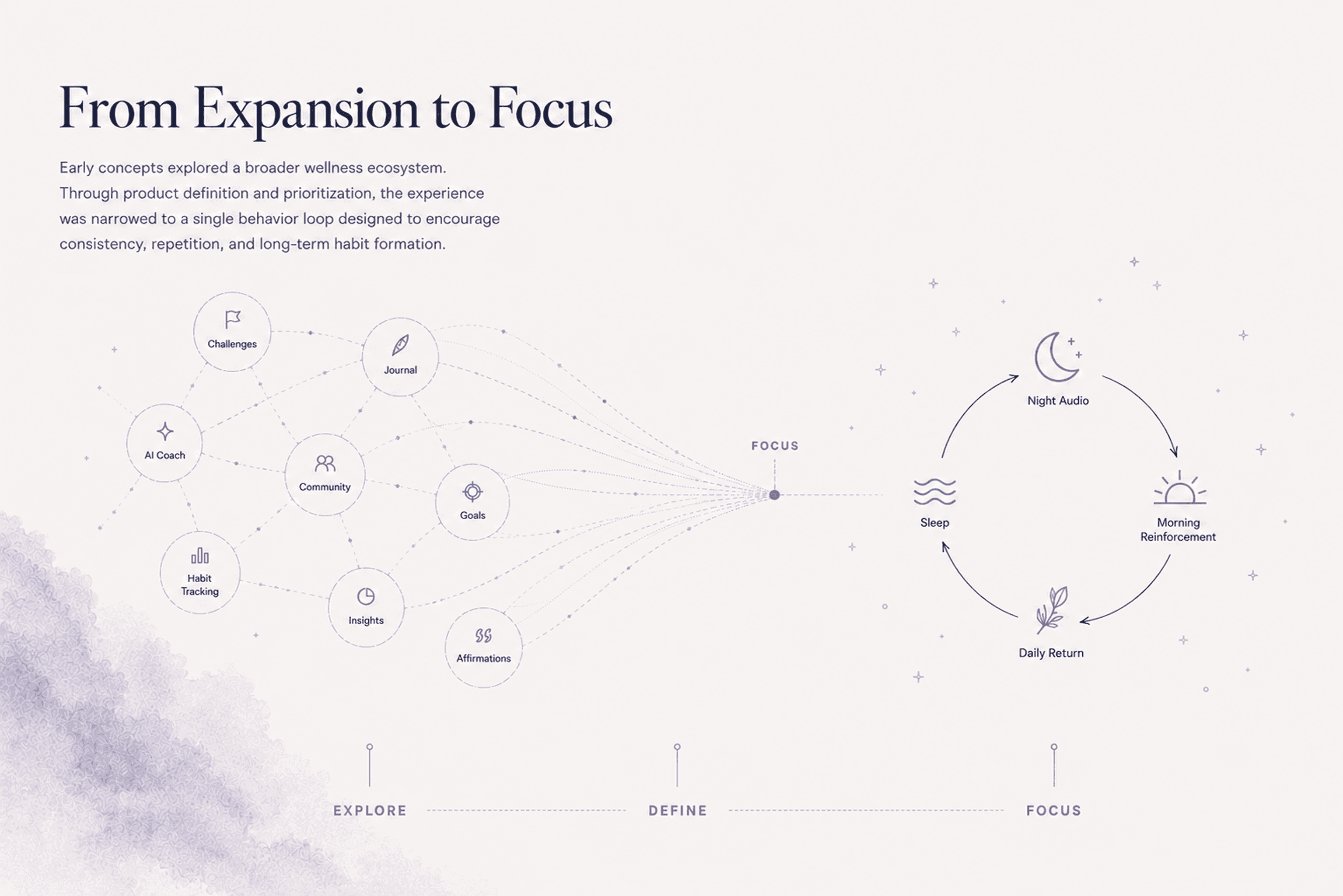
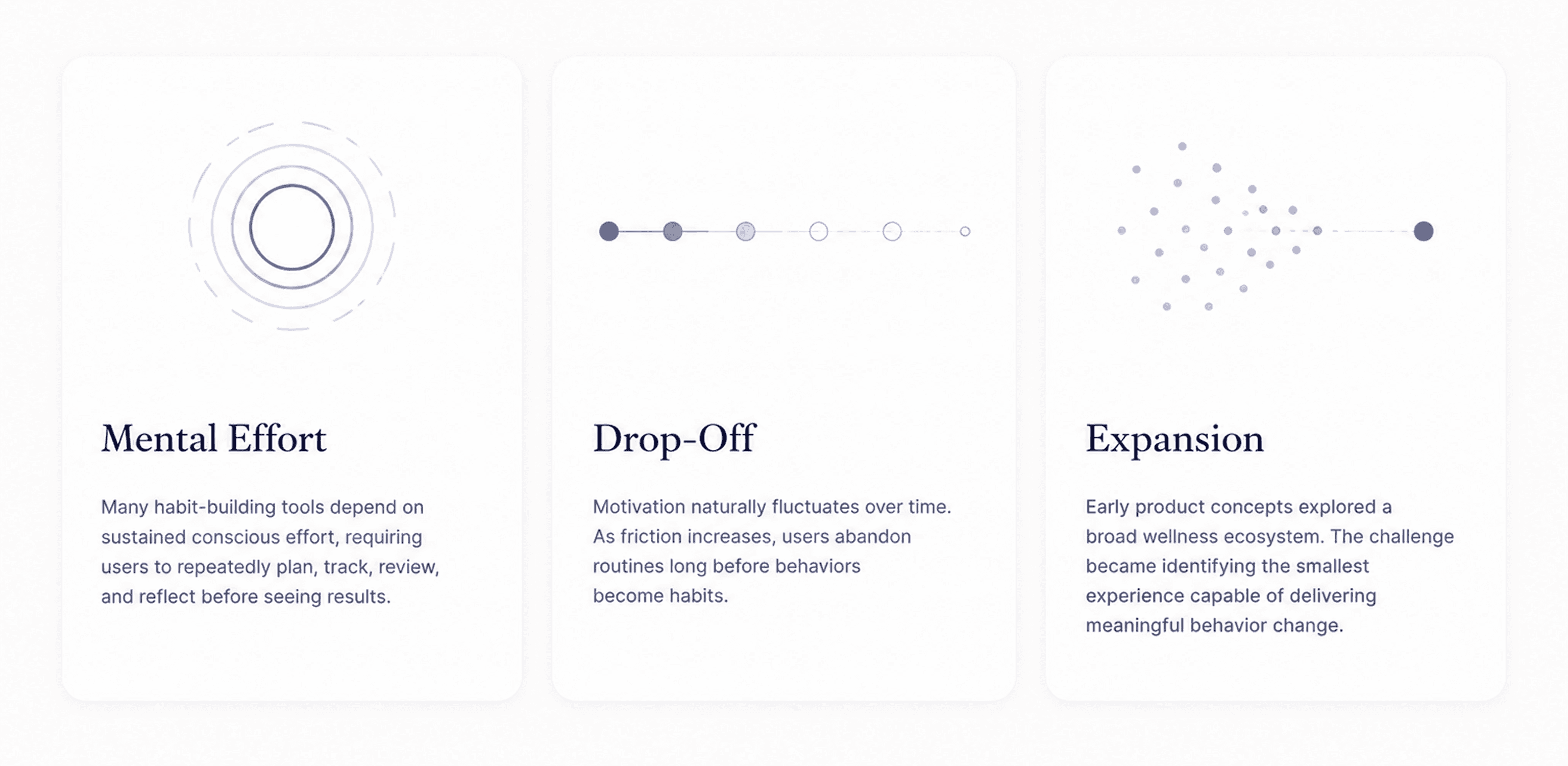
The initial product vision expanded across multiple wellness directions, making the core user journey difficult to define.

The challenge became identifying the smallest repeatable behavioral loop capable of creating clarity, emotional trust, and long-term consistency.

Problem 1

Problem 1

Self-improvement tools rely heavily on conscious effort and consistency.

Problem 2

Problem 2

Users often abandon routines because progress feels demanding and difficult to sustain.

Problem 3

Problem 3

The original product vision expanded too broadly, making the MVP unclear and overwhelming.
( Building a Ritual-Based Product System )

Approach
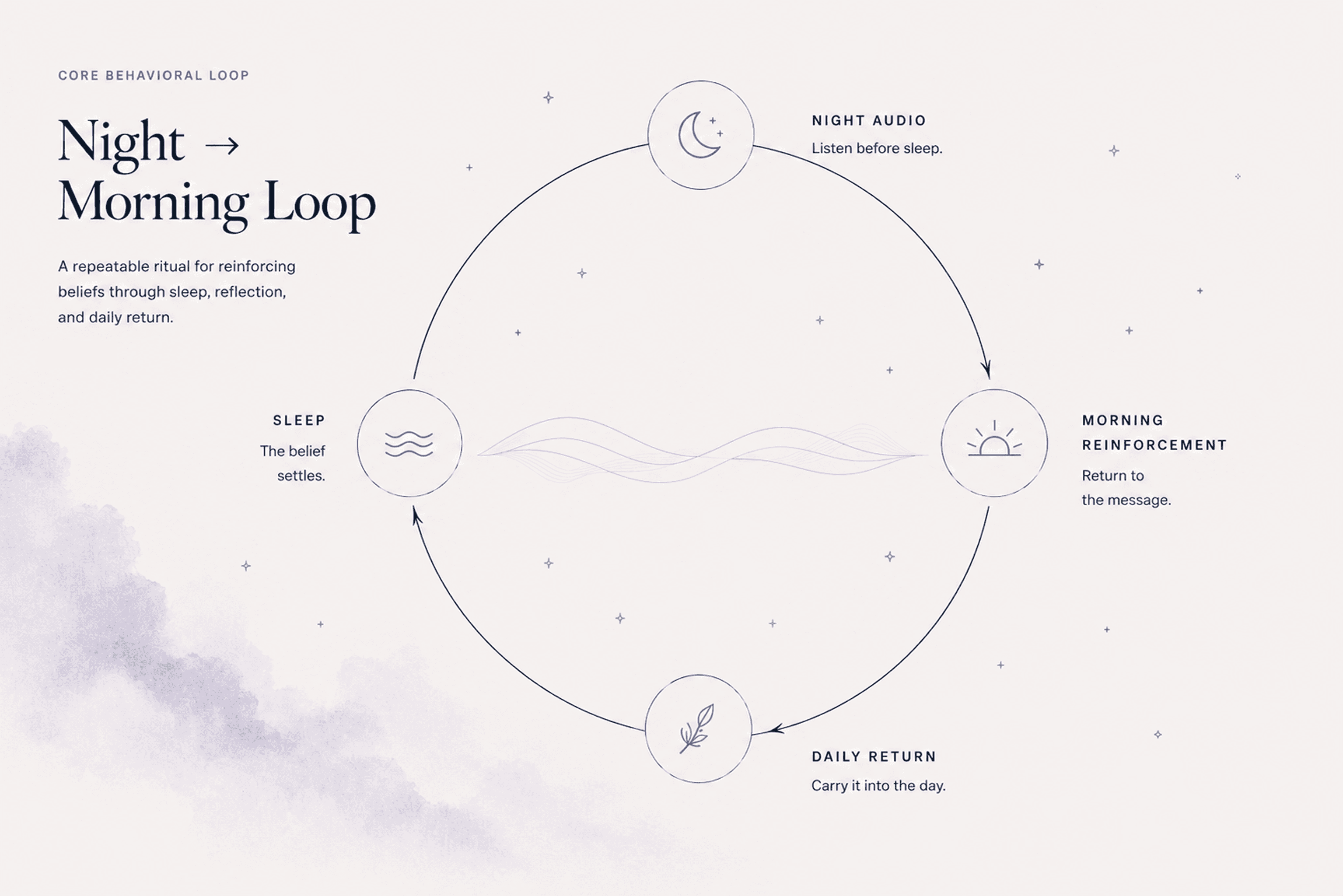
The product was designed around a repeatable behavioral ritual rather than a passive content library. Every interaction aimed to reduce friction and support consistency over time.

Core Screens

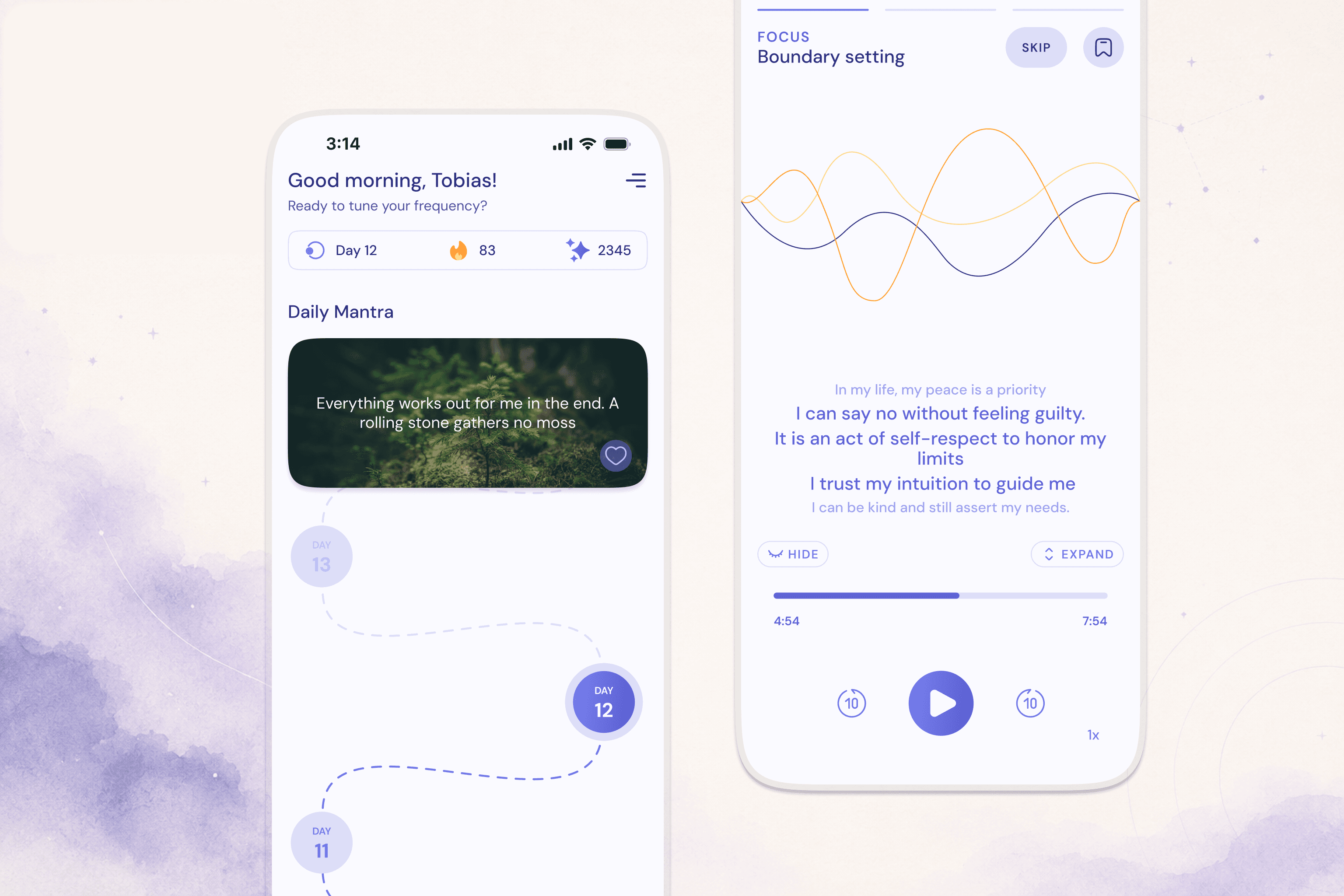
The interface system was designed around low-friction interaction, emotional clarity, and uninterrupted progression through the night-to-morning ritual loop.

Each screen focused on reducing decision fatigue while reinforcing consistency and behavioral momentum over time.
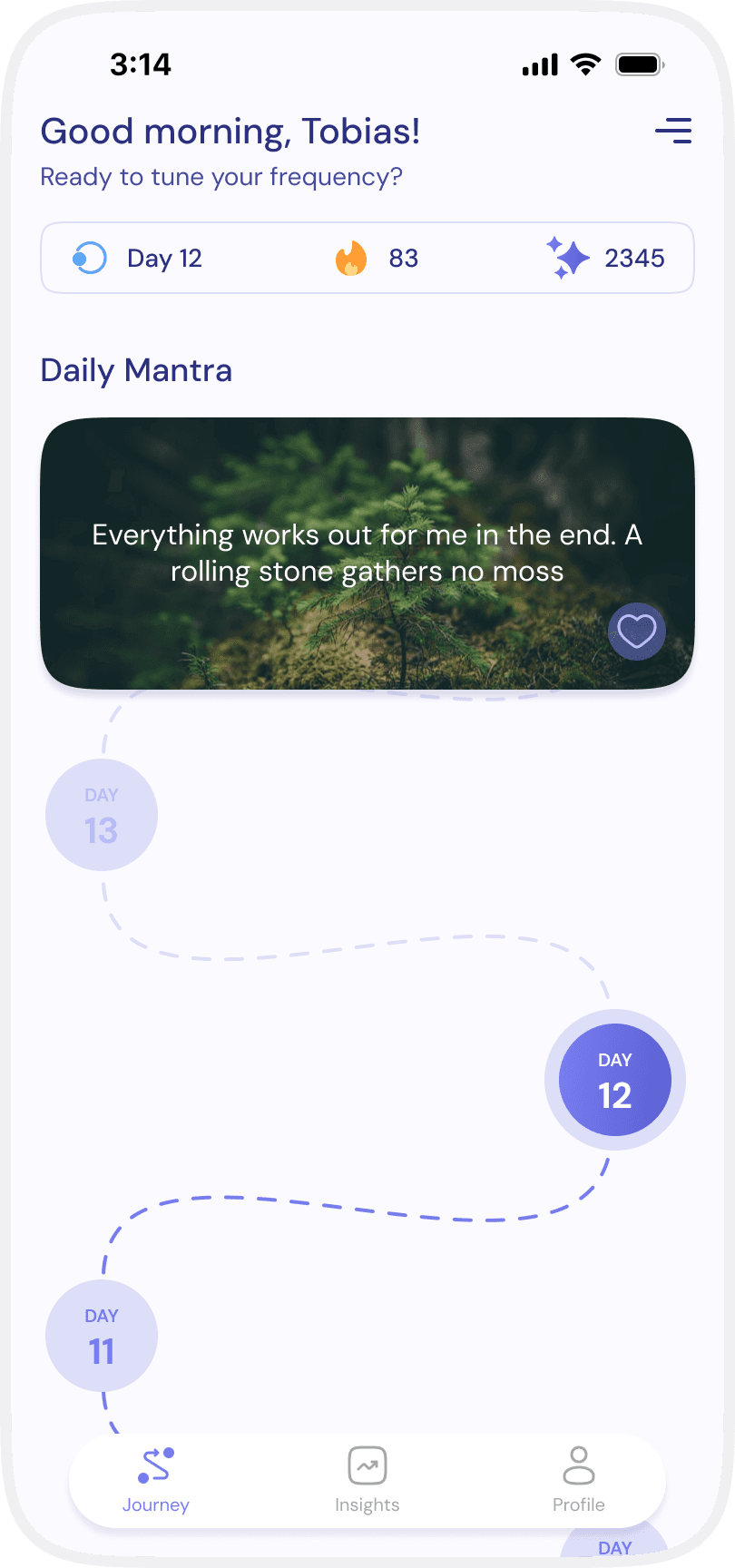
Journey Progression
The journey screen acts as the product's primary navigation model. Instead of organizing the experience around menus and features, progress is framed as a continuous path made up of repeatable daily cycles.

The journey screen acts as the product's primary navigation model. Instead of organizing the experience around menus and features, progress is framed as a continuous path made up of repeatable daily cycles.

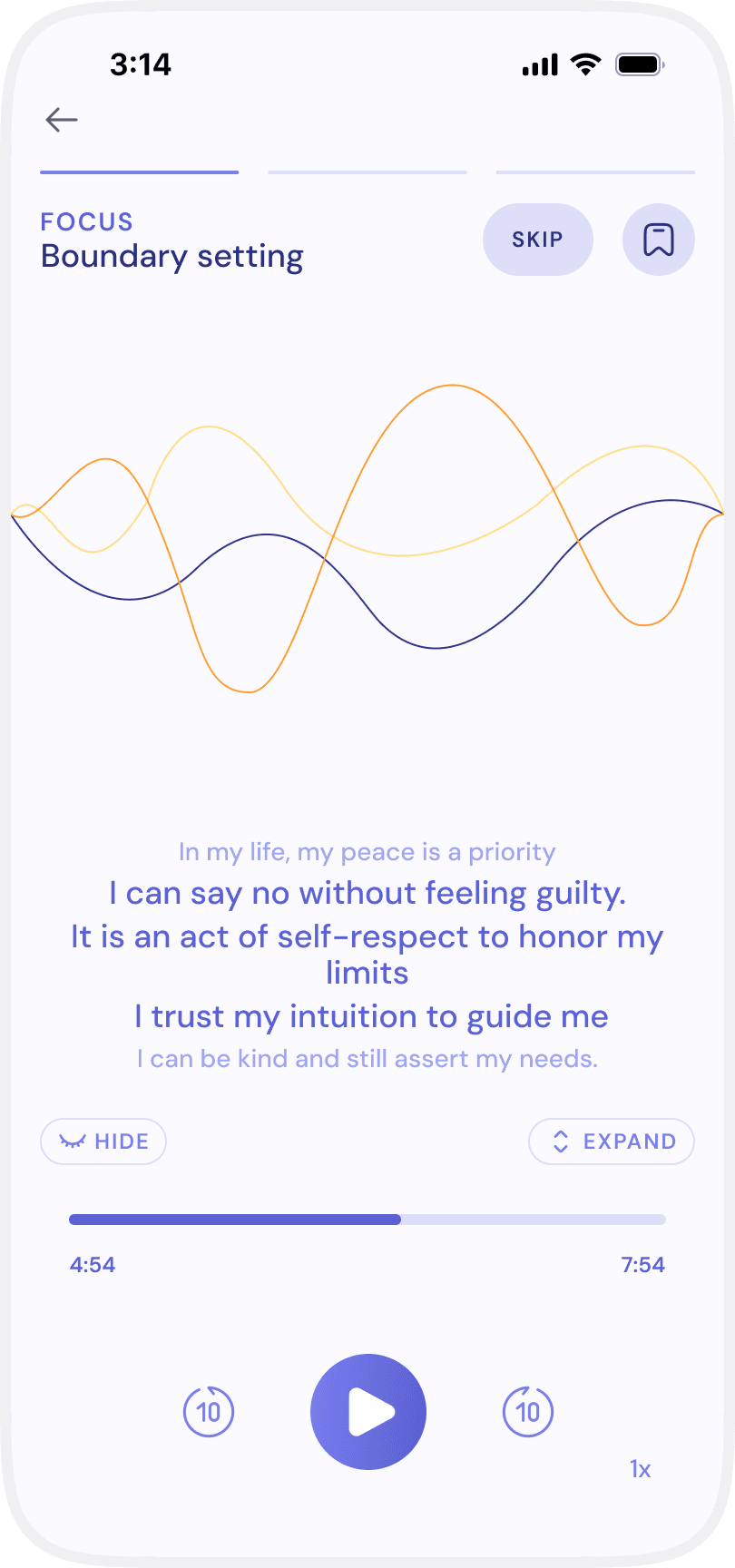
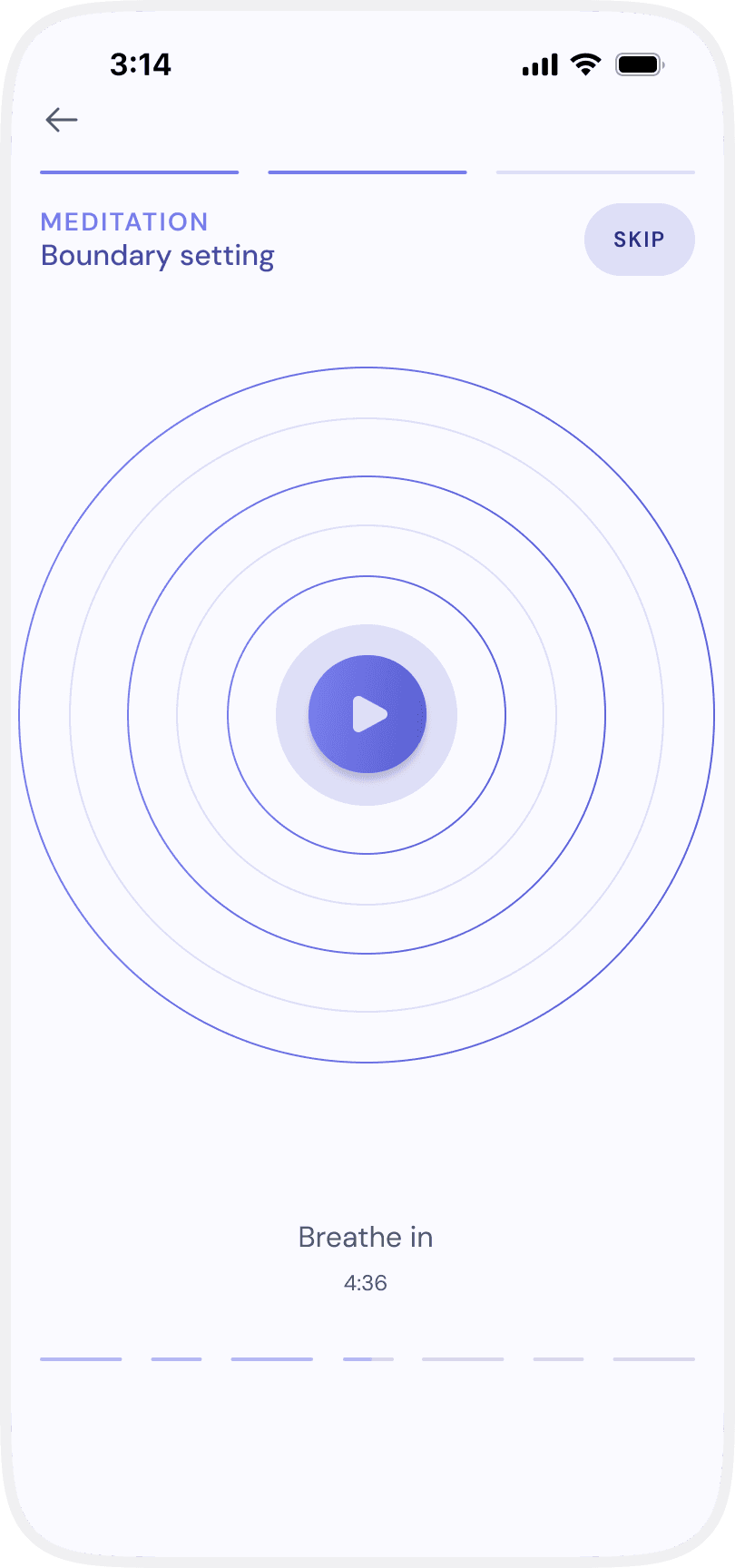
The night ritual was designed as the product's highest-priority interaction. Visual noise was intentionally minimized to encourage calm, focus, and uninterrupted completion before sleep.

The night ritual was designed as the product's highest-priority interaction. Visual noise was intentionally minimized to encourage calm, focus, and uninterrupted completion before sleep.

Night Ritual

The night ritual was designed as the product's highest-priority interaction. Visual noise was intentionally minimized to encourage calm, focus, and uninterrupted completion before sleep.

The night ritual was designed as the product's highest-priority interaction. Visual noise was intentionally minimized to encourage calm, focus, and uninterrupted completion before sleep.

The experience reduces competing actions and places attention entirely on the listening session, supporting habit formation through simplicity and repetition rather than complexity.

The experience reduces competing actions and places attention entirely on the listening session, supporting habit formation through simplicity and repetition rather than complexity.

Morning Reinforcement

The morning experience reintroduces the belief explored the night before, creating continuity between sleep and waking states. Rather than presenting new content, the interface reinforces an existing message at a moment when users are more likely to engage intentionally.

The morning experience reintroduces the belief explored the night before, creating continuity between sleep and waking states. Rather than presenting new content, the interface reinforces an existing message at a moment when users are more likely to engage intentionally.

This completes the core behavioral loop while strengthening consistency across daily sessions.

This completes the core behavioral loop while strengthening consistency across daily sessions.

Progress & Patterns

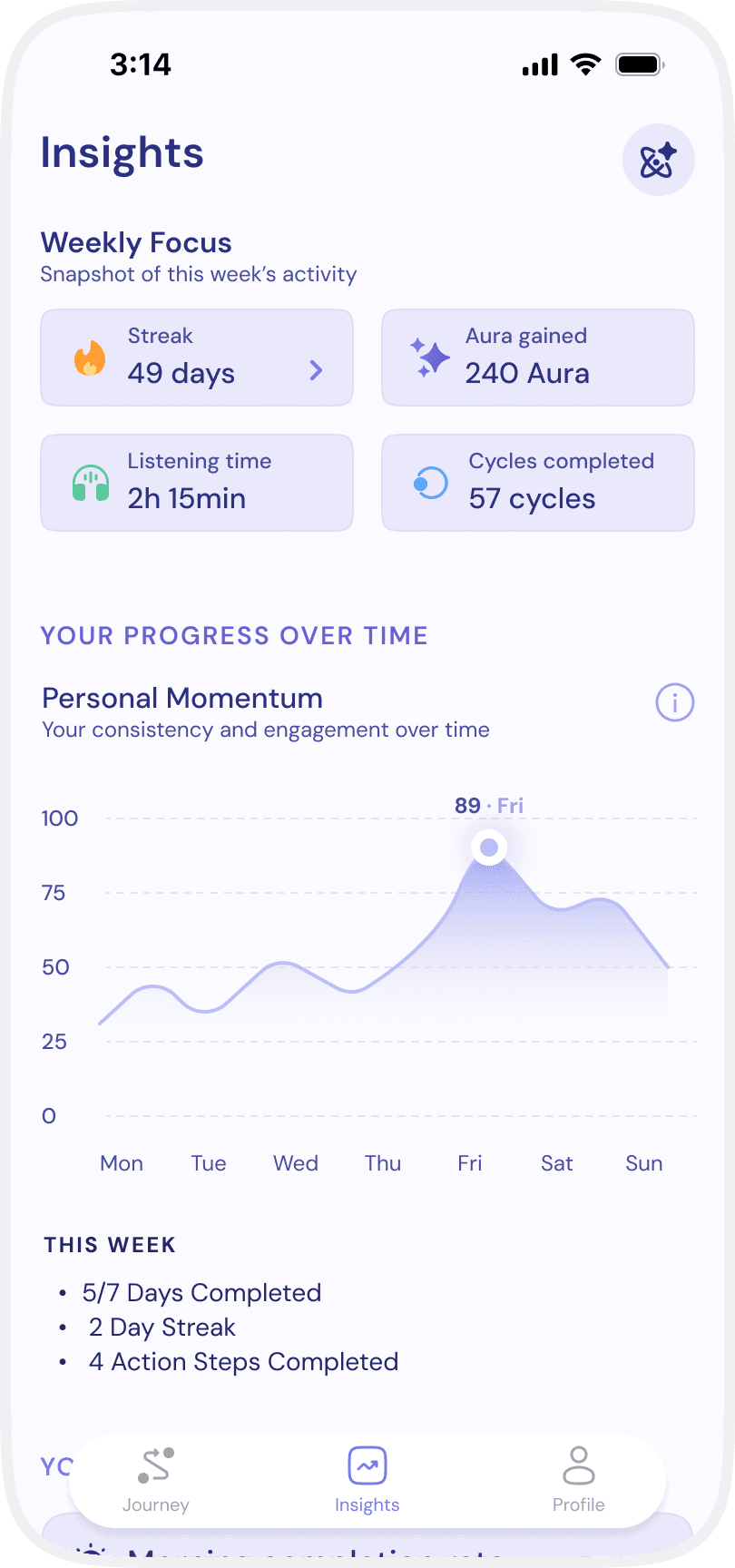
The insights experience focuses on behavioral patterns rather than productivity metrics. Instead of overwhelming users with analytics, it highlights consistency, completion rhythms, and recurring habits that support long-term change.

The insights experience focuses on behavioral patterns rather than productivity metrics. Instead of overwhelming users with analytics, it highlights consistency, completion rhythms, and recurring habits that support long-term change.

The goal is to provide enough feedback to encourage reflection while avoiding the complexity often found in traditional habit-tracking products.

The goal is to provide enough feedback to encourage reflection while avoiding the complexity often found in traditional habit-tracking products.

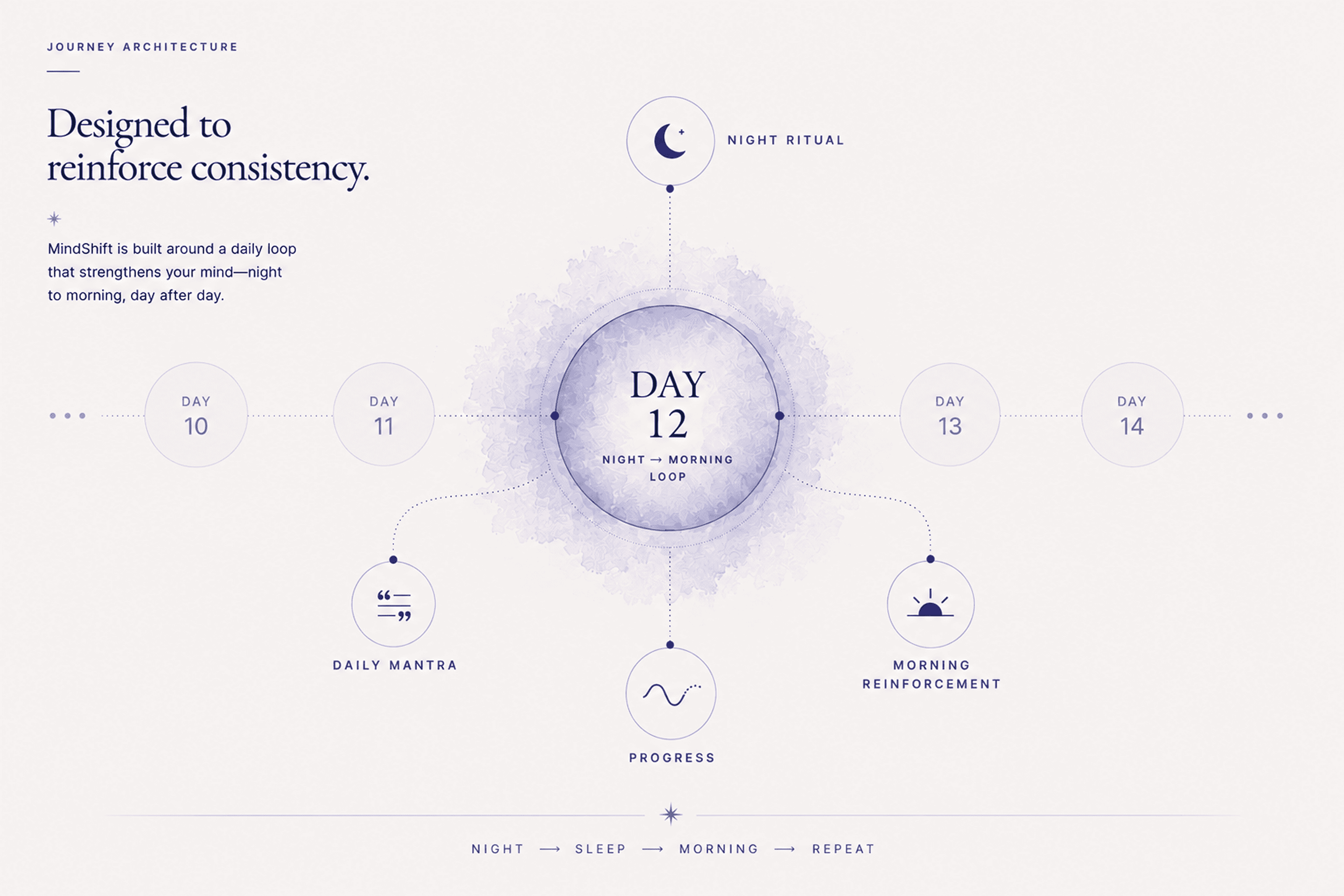
Journey Architecture

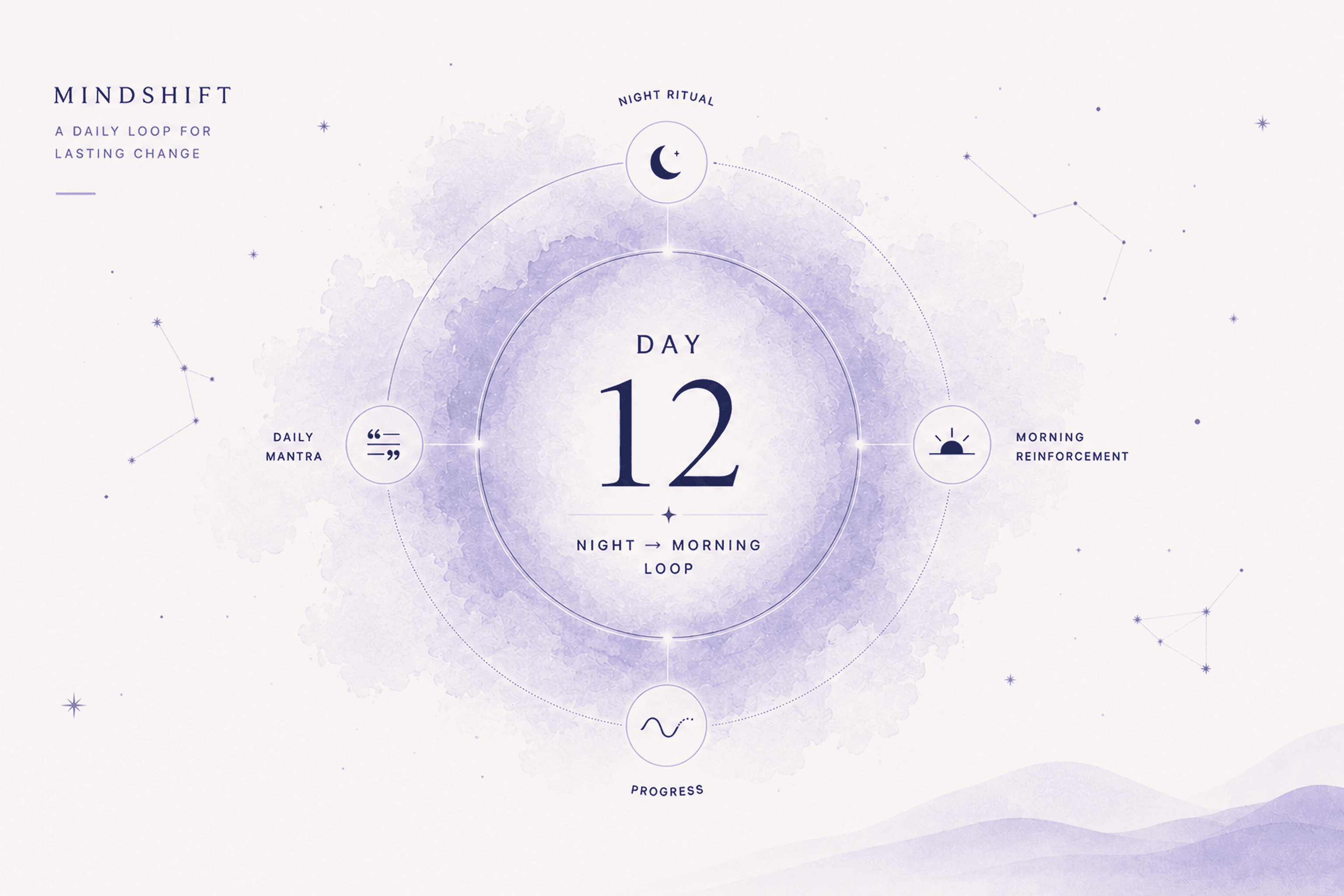
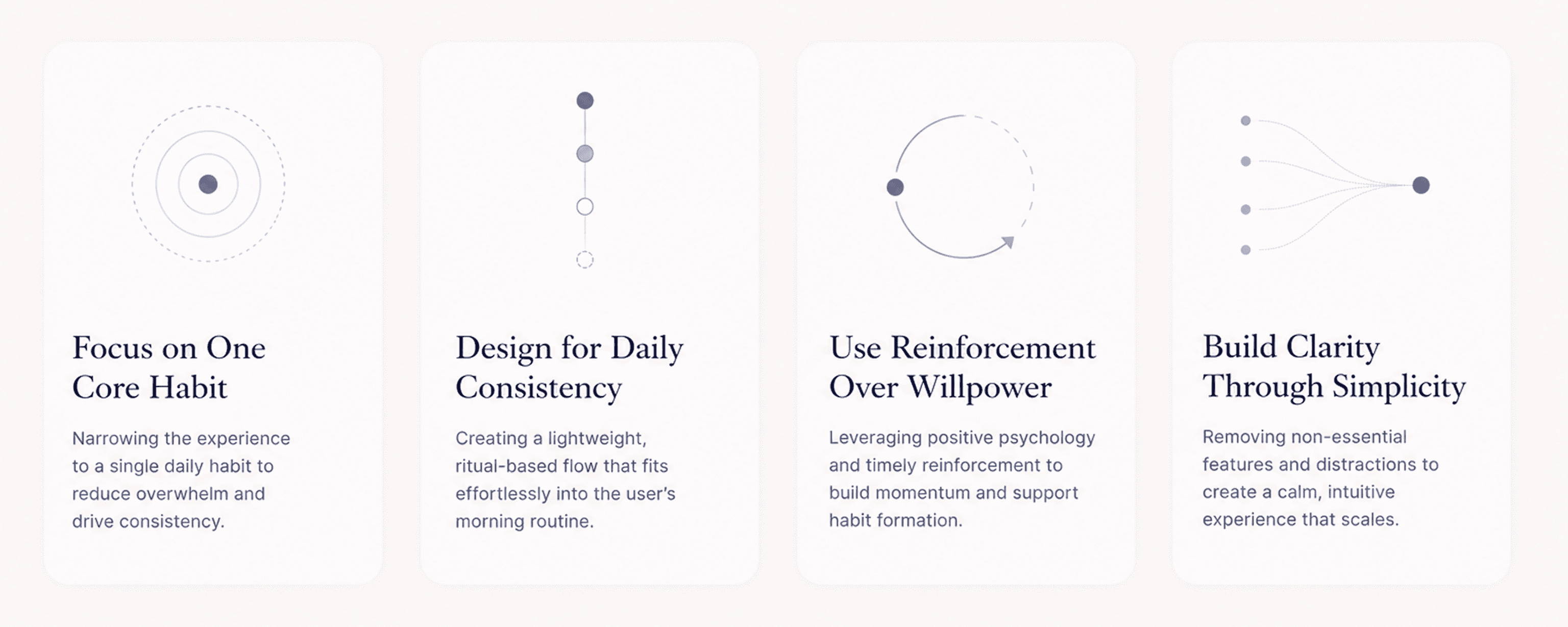
Instead of building a feature-heavy wellness platform, the product was structured around a single behavioral journey repeated daily.
Key Design Decisions

The product direction focused on reducing cognitive load and reinforcing repeatable behavior through calm interfaces, guided progression, and emotionally grounded interaction patterns.

Rather than expanding features, the system prioritized clarity, ritual, and long-term consistency.
( Outcomes & Product Direction )

Metrics

The project focused on designing a repeatable behavioral loop capable of supporting long-term engagement, emotional trust, and sustainable retention.

The following metrics represent projected outcomes based on the MVP structure and intended user behavior patterns.

70%

Session Completion

50%

Return Rate

5%

Conversion Rate

The product direction emphasized repeat consistency over high-frequency engagement.

Success was measured less by session volume and more by ritual completion, morning return behavior, and long-term habit retention.

The product direction emphasized repeat consistency over high-frequency engagement.

Success was measured less by session volume and more by ritual completion, morning return behavior, and long-term habit retention.

Business Model

Freemium subscription model centered around guided habit formation.

Users begin with a free 30-day journey before transitioning into a recurring subscription designed around long-term consistency and retention.

( Outcomes & Reflections )

Reflection

MindShift reinforced the importance of defining behavior before expanding features.

Rather than designing a broad wellness ecosystem immediately, the project became an exercise in identifying the smallest repeatable loop capable of creating meaningful long-term engagement.

It also highlighted the importance of emotional trust in wellness products, where clarity, tone, and interaction design directly shape user credibility and retention.