AMTAP

Connecting users with fitness professionals through a scalable marketplace experience.
About project

Led end-to-end product design for a dual-sided fitness platform used by trainers and clients across workout planning, progress tracking, and coaching experiences.

Led end-to-end product design for a dual-sided fitness platform used by trainers and clients across workout planning, progress tracking, and coaching experiences.

Role

Solo Product Designer

Scope

UX Design, Systems Design

Timeline

2022–2025

Impact

250+ screens redesigned

( Impact )

250+

Screens designed and refined

Dual-sided

Trainer + client ecosystem

Solo Designer

Led product UX across platform

Design System

Dark mode refresh + scalable tokens

Overview
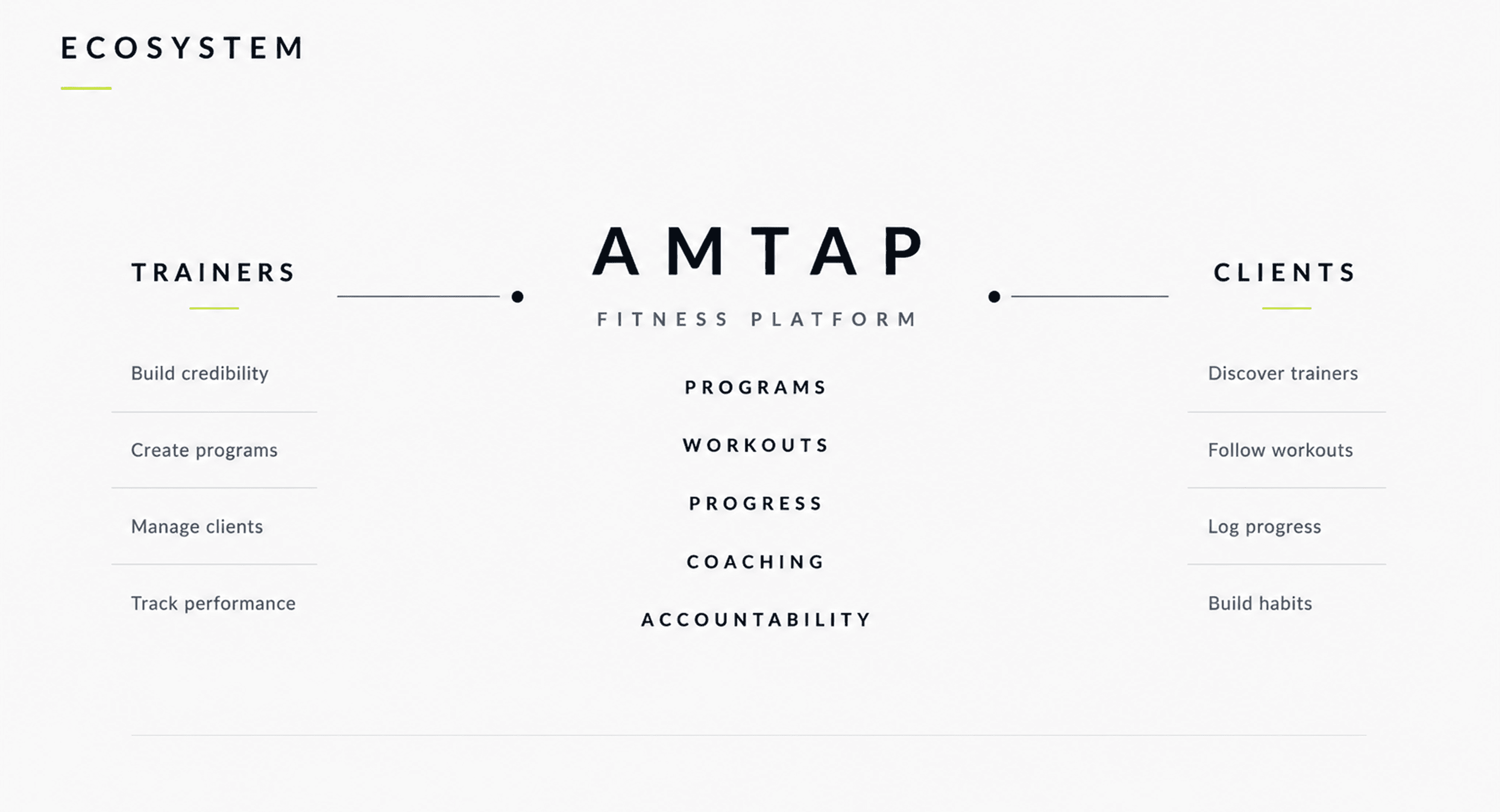
AMTAP is a dual-sided fitness platform helping trainers manage coaching businesses while guiding clients through structured workout programs, progress tracking, and habit-building experiences.

AMTAP is a dual-sided fitness platform helping trainers manage coaching businesses while guiding clients through structured workout programs, progress tracking, and habit-building experiences.

As the sole in-house Product Designer, I led the end-to-end product experience across 250+ screens, from UX architecture and interaction design to usability refinement and scalable design systems.

As the sole in-house Product Designer, I led the end-to-end product experience across 250+ screens, from UX architecture and interaction design to usability refinement and scalable design systems.

Due to NDA constraints, some visuals and product details have been simplified or modified. This case study focuses on process, systems thinking, and interaction design decisions.

Due to NDA constraints, some visuals and product details have been simplified or modified. This case study focuses on process, systems thinking, and interaction design decisions.

( Designing for Two Different Mental Models )

Challenge
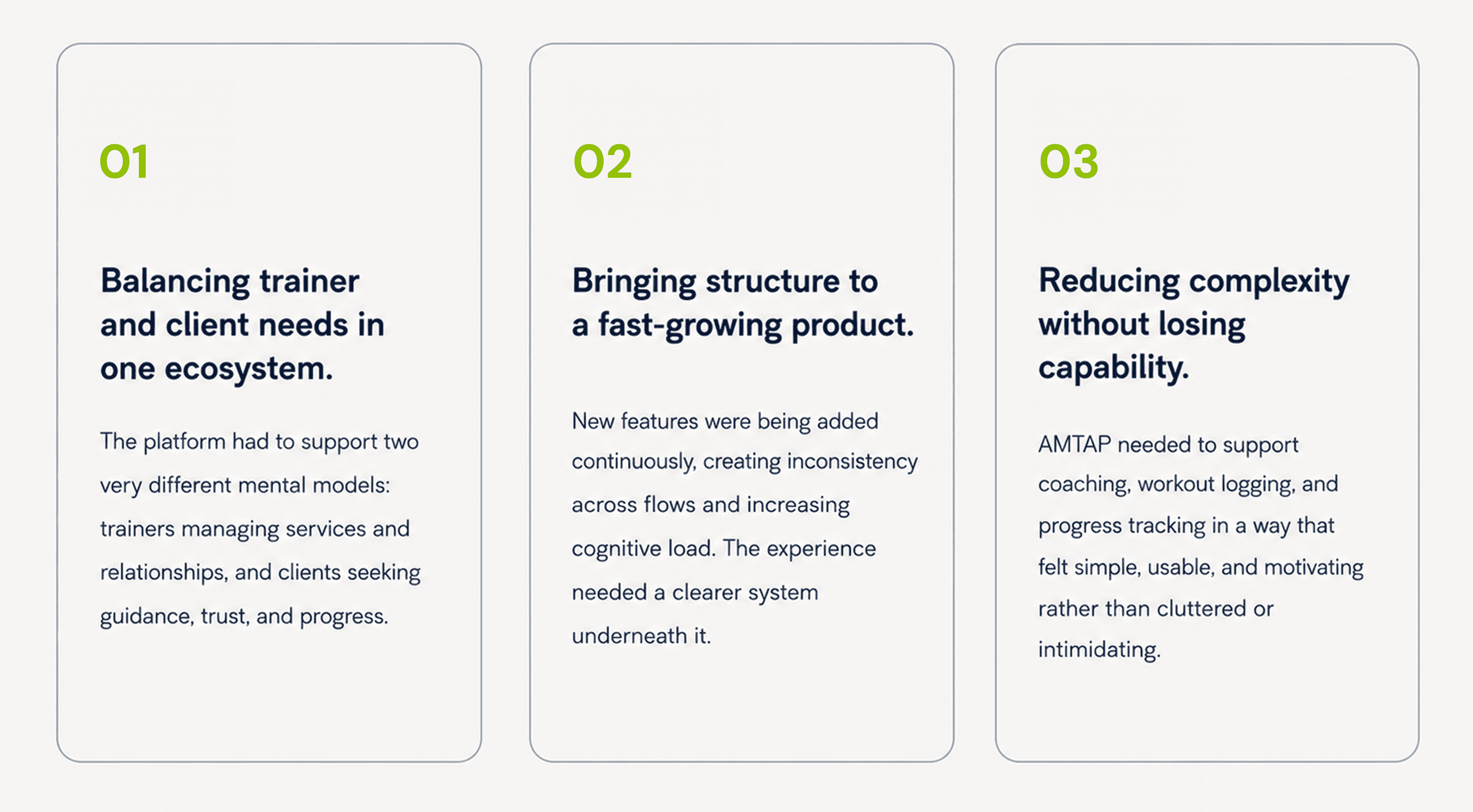
Designing AMTAP meant balancing two fundamentally different mental models inside one evolving product ecosystem.

Designing AMTAP meant balancing two fundamentally different mental models inside one evolving product ecosystem.

Trainers needed infrastructure to coach and manage clients efficiently, while clients needed clarity, motivation, and low-friction progress tracking.

Trainers needed infrastructure to coach and manage clients efficiently, while clients needed clarity, motivation, and low-friction progress tracking.

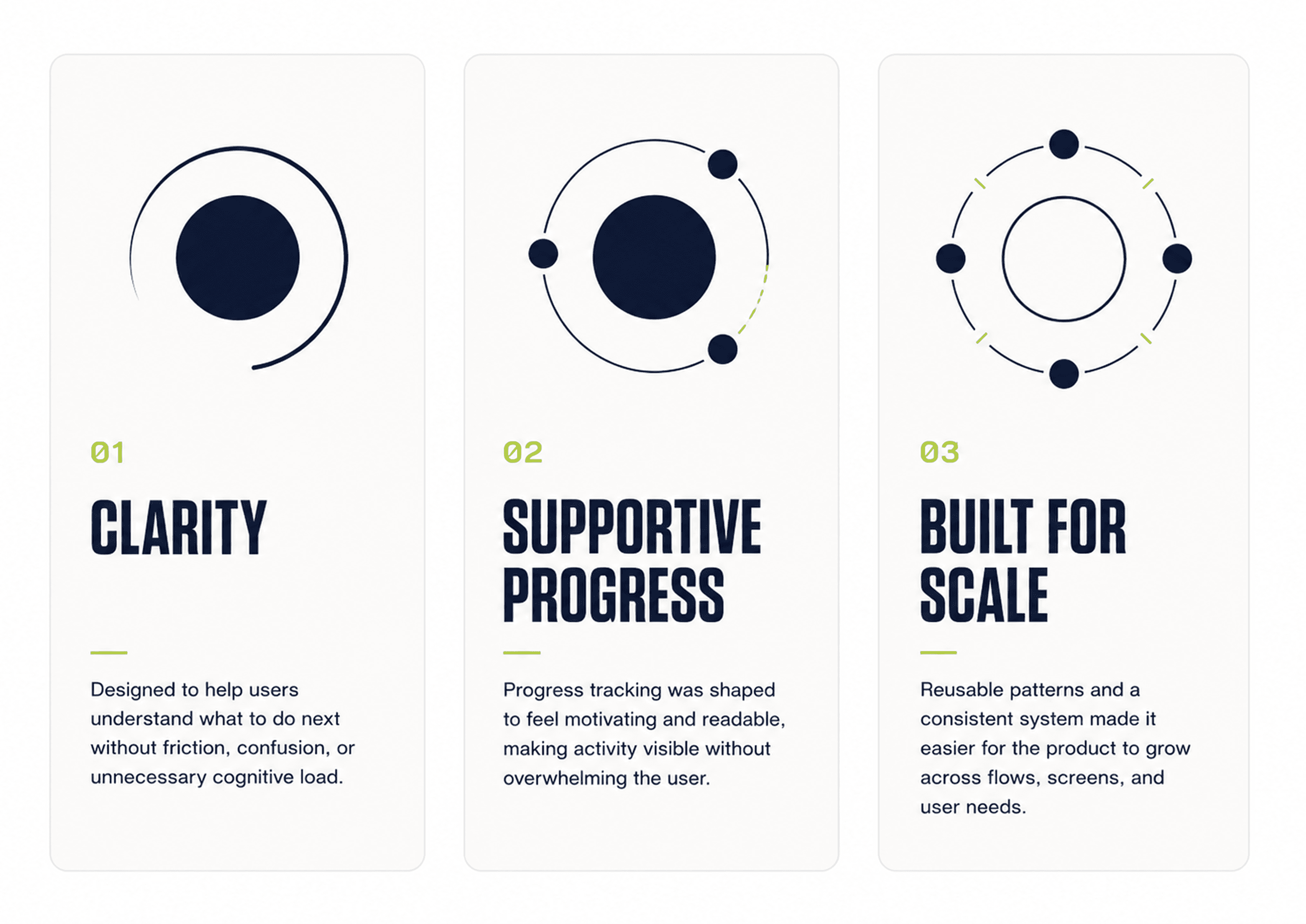
( Design Principles )

Direction

Rather than adding more interface complexity, the design direction focused on reducing cognitive load through clearer hierarchy, progressive disclosure, and reusable interaction patterns.

Rather than adding more interface complexity, the design direction focused on reducing cognitive load through clearer hierarchy, progressive disclosure, and reusable interaction patterns.

( Interaction System )

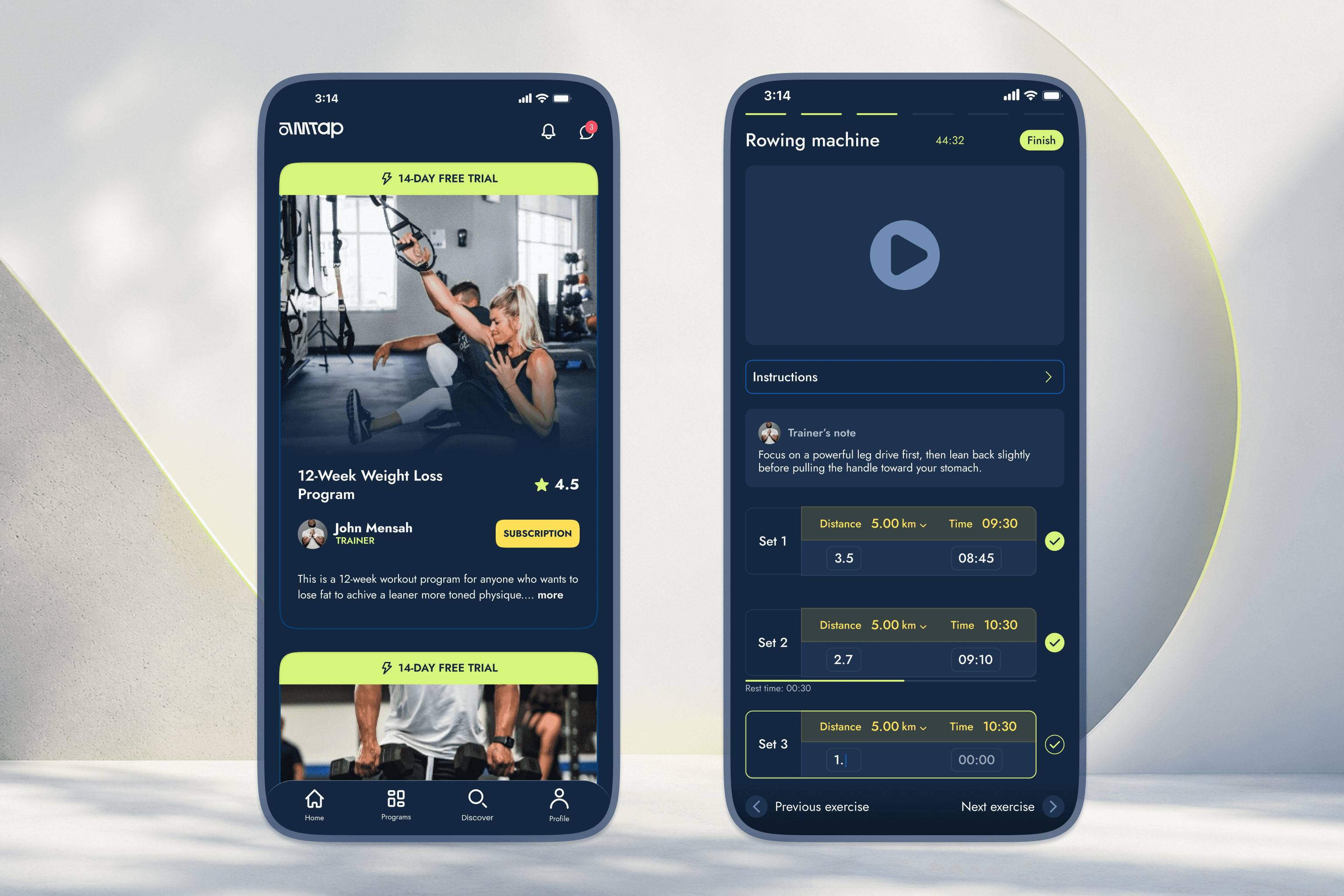
Designing a clearer workout logging system
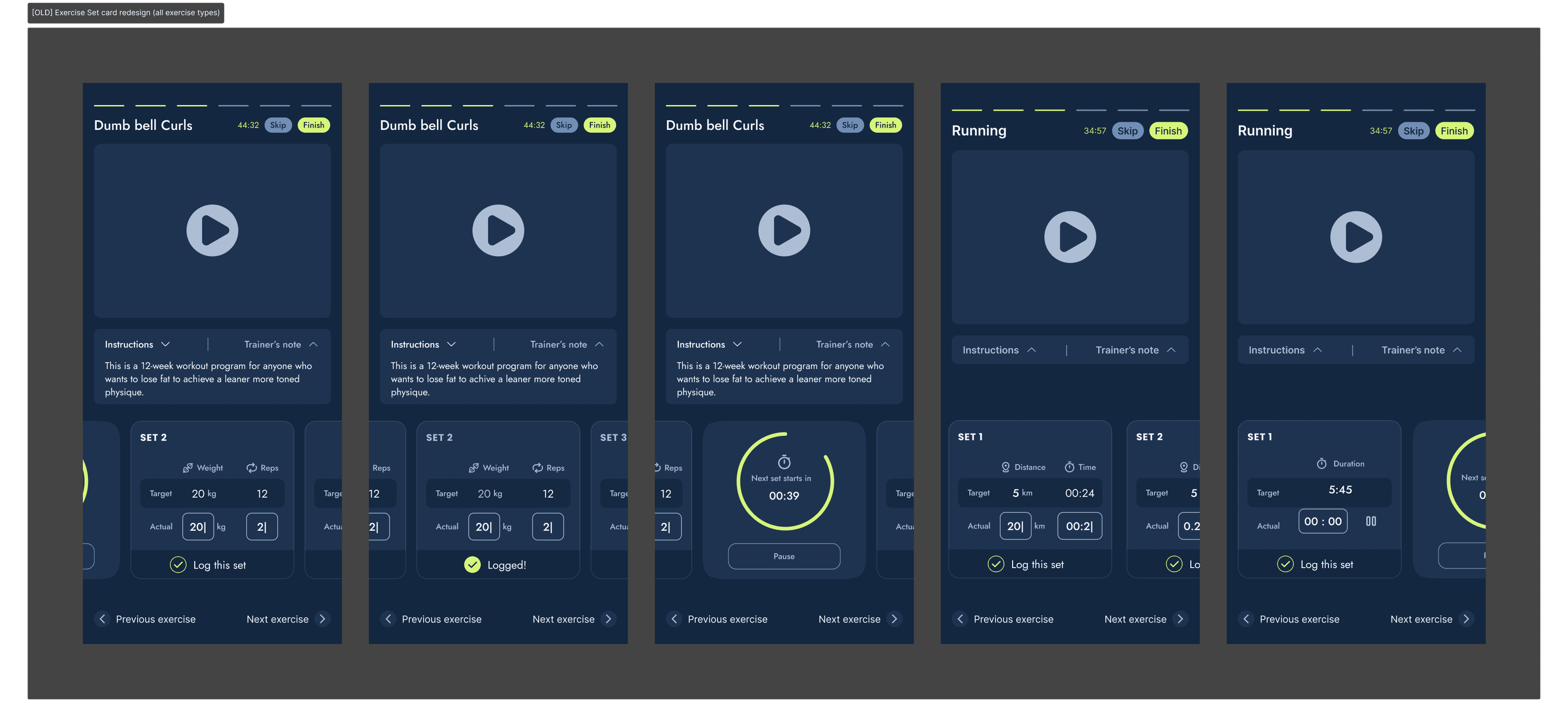
Workout logging became one of AMTAP’s most complex interaction challenges because different exercise types required different measurements: reps, weight, distance, duration, rest time, and trainer recommendations.

The goal was to create a flexible logging pattern that could support multiple workout types without making every set feel like a dense form.

Workout logging became one of AMTAP’s most complex interaction challenges because different exercise types required different measurements: reps, weight, distance, duration, rest time, and trainer recommendations.

The goal was to create a flexible logging pattern that could support multiple workout types without making every set feel like a dense form.

Early explorations tested different ways to support varied exercise types, rest timers, target values, and actual user inputs inside one reusable set card.

A modular pattern for different workout types

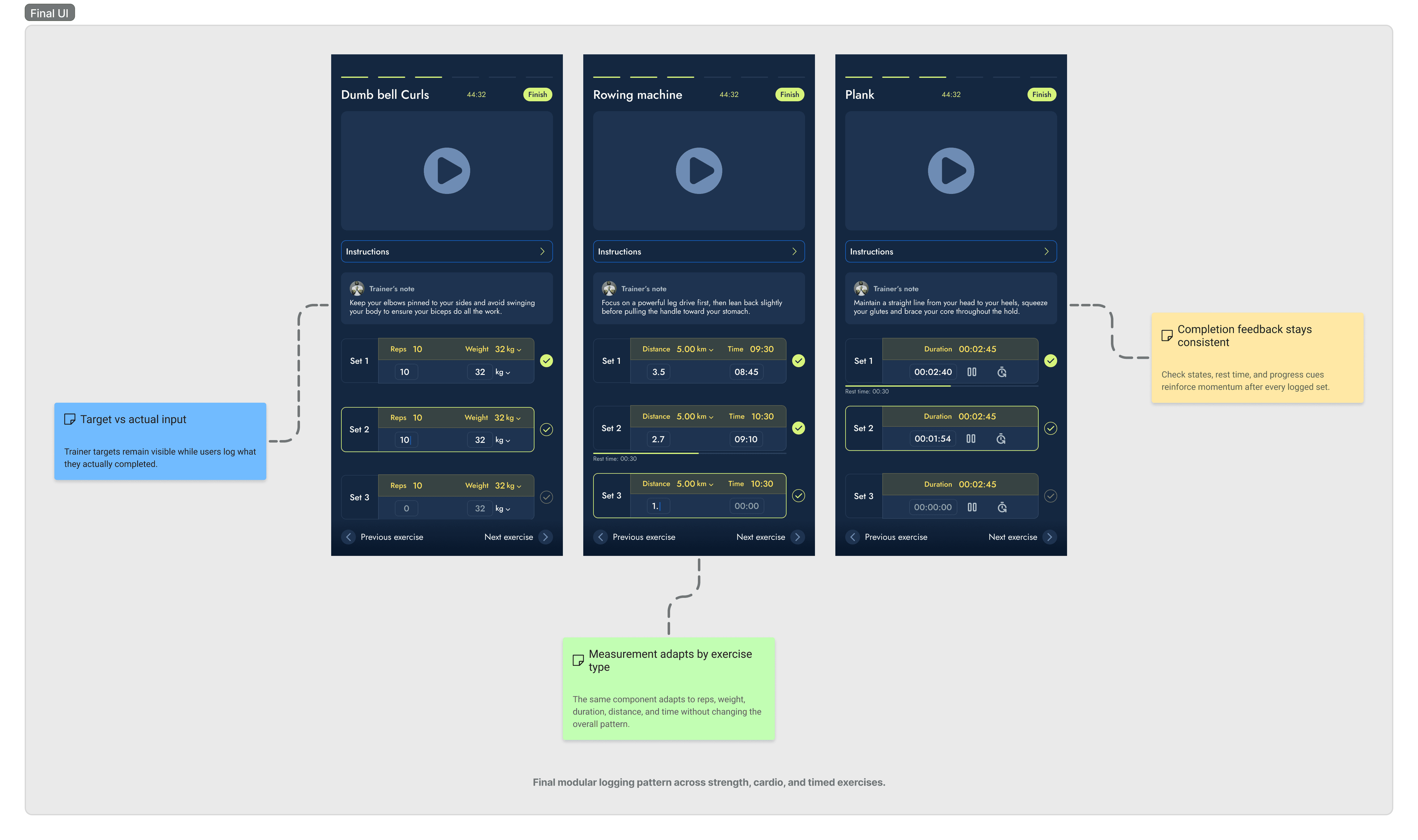
Instead of designing separate layouts for every exercise type, I moved toward a modular set row that could adapt based on the measurement needed.

The same structure could support strength, timed, and distance-based exercises while keeping the logging action familiar.
Key decision

The final direction prioritised reuse over novelty. Each set needed to feel consistent enough to learn once, but flexible enough to handle different workout formats.

System Design
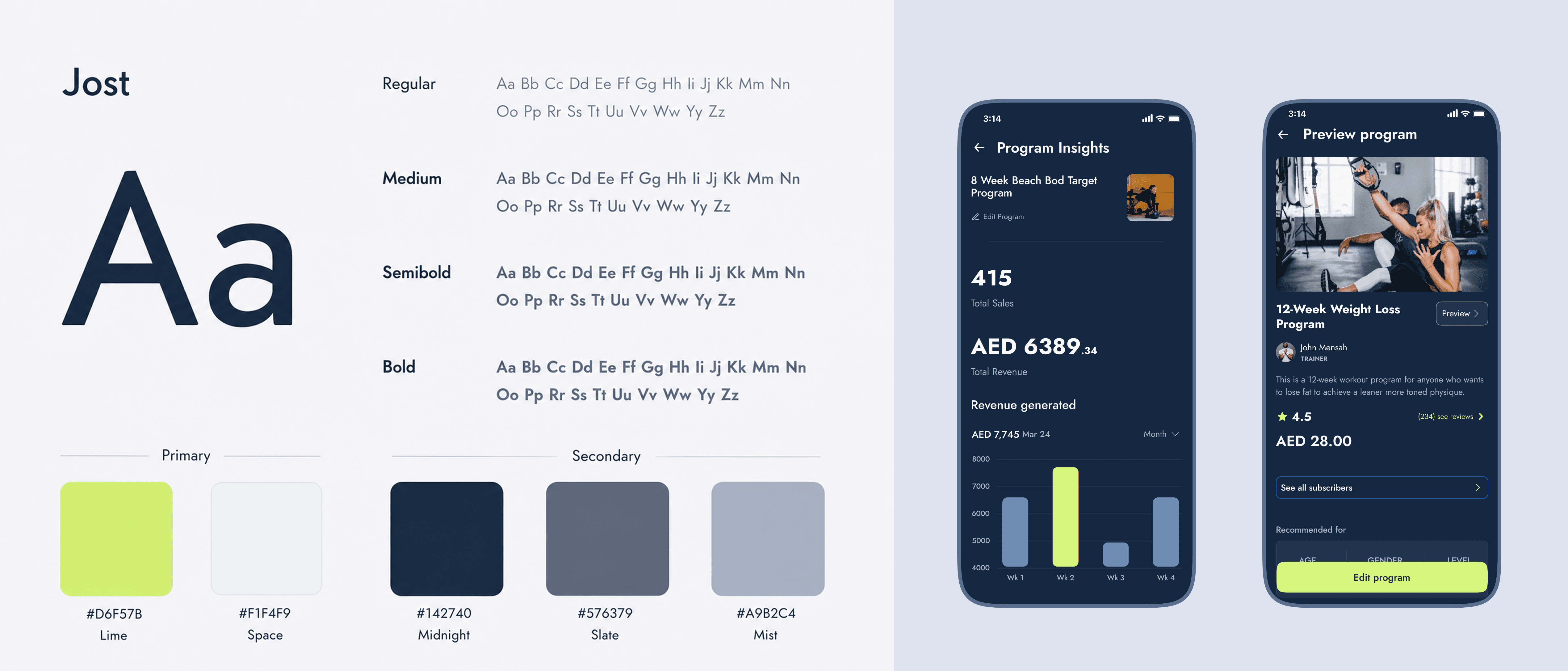
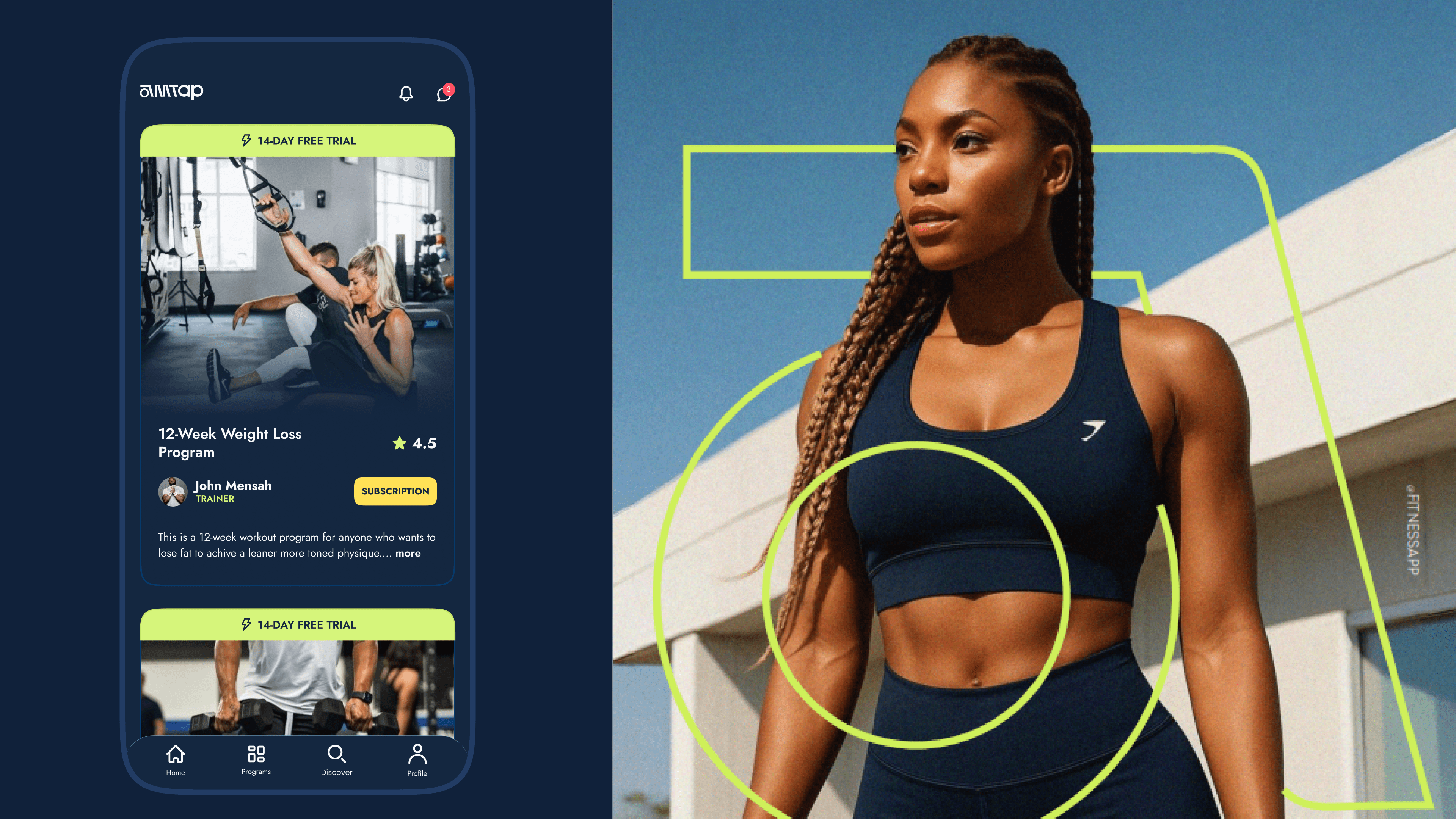
As the platform expanded, consistency became critical. A scalable design system helped unify interaction patterns, reduce UI fragmentation, and support faster iteration across the product.

As the platform expanded, consistency became critical. A scalable design system helped unify interaction patterns, reduce UI fragmentation, and support faster iteration across the product.

Typography, color, and reusable interface patterns helped unify trainer tools, program pages, and progress-focused product surfaces.

( Outcomes & Reflections )

Outcome
  • Unified trainer and client experiences within a scalable product structure

  • Refined interaction systems across 250+ evolving screens

  • Introduced reusable UI patterns and scalable design foundations

  • Improved usability clarity across complex workout flows

  • Unified trainer and client experiences within a scalable product structure

  • Refined interaction systems across 250+ evolving screens

  • Introduced reusable UI patterns and scalable design foundations

  • Improved usability clarity across complex workout flows

AMTAP strengthened my ability to design scalable systems under evolving product constraints while balancing usability, business needs, and long-term maintainability.

AMTAP strengthened my ability to design scalable systems under evolving product constraints while balancing usability, business needs, and long-term maintainability.