Codetrain Africa UX Curriculum

Designing a project-driven UX learning system from scratch.

( Impact )

0 → 1

0 → 1

CURRICULUM DESIGN

2-year

2-year

PROGRAM STRUCTURE

3 cohorts

3 cohorts

MANAGED SIMULTANEOUSLY

Portfolio-driven

Portfolio-driven

LEARNING SYSTEM

About project

Codetrain Africa is a tech education platform training students in software development and design.

I was brought in to design and lead the UX curriculum from the ground up, creating a structured learning system that could take students from complete beginners to portfolio-ready designers.

Codetrain Africa is a tech education platform training students in software development and design.

I was brought in to design and lead the UX curriculum from the ground up, creating a structured learning system that could take students from complete beginners to portfolio-ready designers.

Role

UX Curriculum Lead

Scope

Curriculum Design, UX Education

Timeline

2023—2025

Impact

0→1 UX Learning System

Overview
There was no formal UX curriculum in place, so the work began as a systems design challenge: how do you structure learning so beginners can move from tools and theory into real-world product thinking?

I designed a project-driven curriculum built around tool mastery, UX process, critique, iteration, portfolio development, and career readiness.

Over time, the curriculum evolved through student feedback, observed learning gaps, critique sessions, and changing industry expectations.

There was no formal UX curriculum in place, so the work began as a systems design challenge: how do you structure learning so beginners can move from tools and theory into real-world product thinking?

I designed a project-driven curriculum built around tool mastery, UX process, critique, iteration, portfolio development, and career readiness.

Over time, the curriculum evolved through student feedback, observed learning gaps, critique sessions, and changing industry expectations.

Due to NDA constraints, some visuals and product details have been simplified or modified. This case study focuses on process, systems thinking, and interaction design decisions.

Due to NDA constraints, some visuals and product details have been simplified or modified. This case study focuses on process, systems thinking, and interaction design decisions.

( Designing a Learning System From Zero )

Challenge
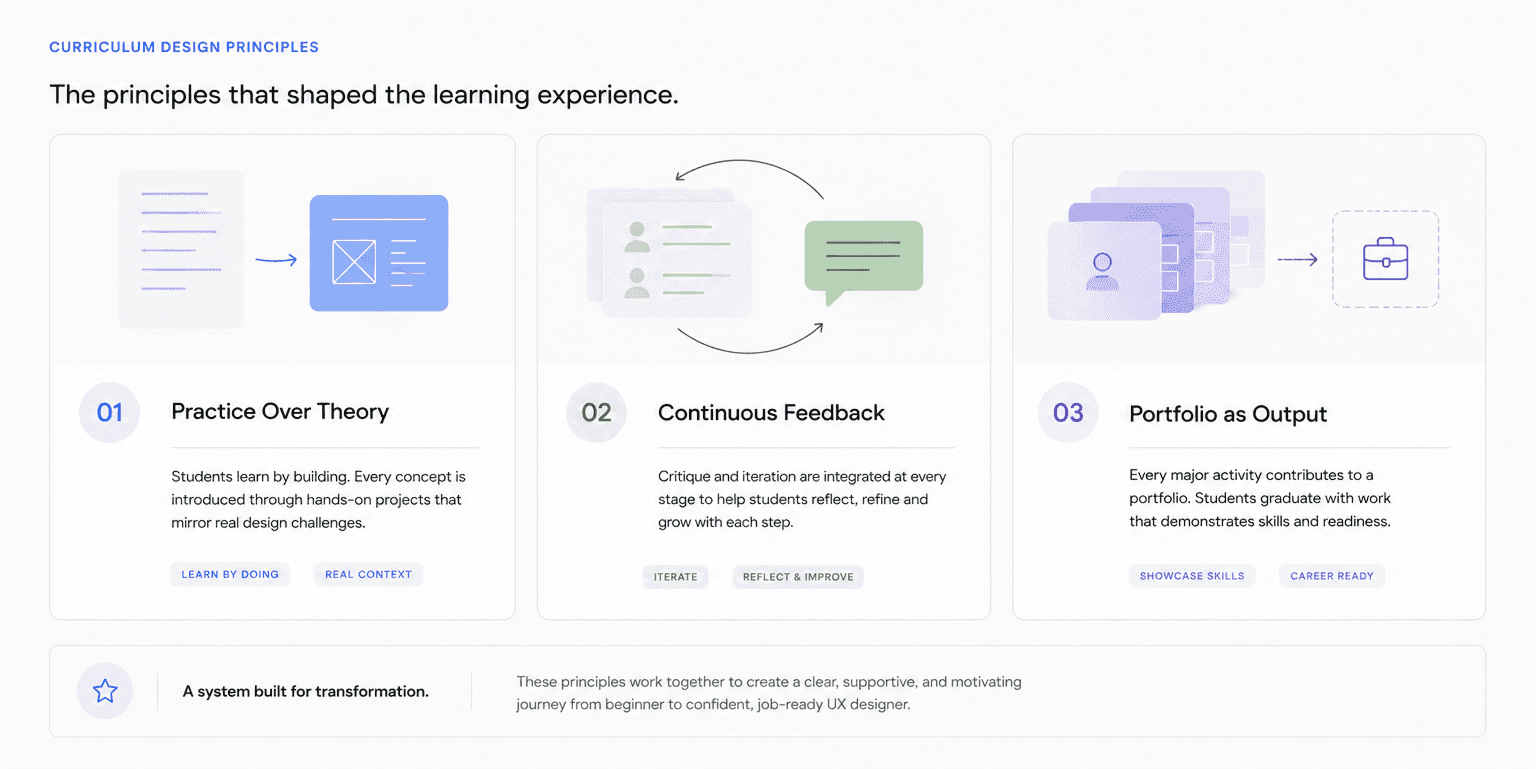
Students entering the program came from different backgrounds and often had little or no prior design experience.

The challenge wasn't teaching individual tools. It was designing a learning system that could take students from complete beginners to portfolio-ready UX designers through structured practice, critique, collaboration, and real-world application.

Students entering the program came from different backgrounds and often had little or no prior design experience.

The challenge wasn't teaching individual tools. It was designing a learning system that could take students from complete beginners to portfolio-ready UX designers through structured practice, critique, collaboration, and real-world application.

( Treating Curriculum as Product Design )

Approach
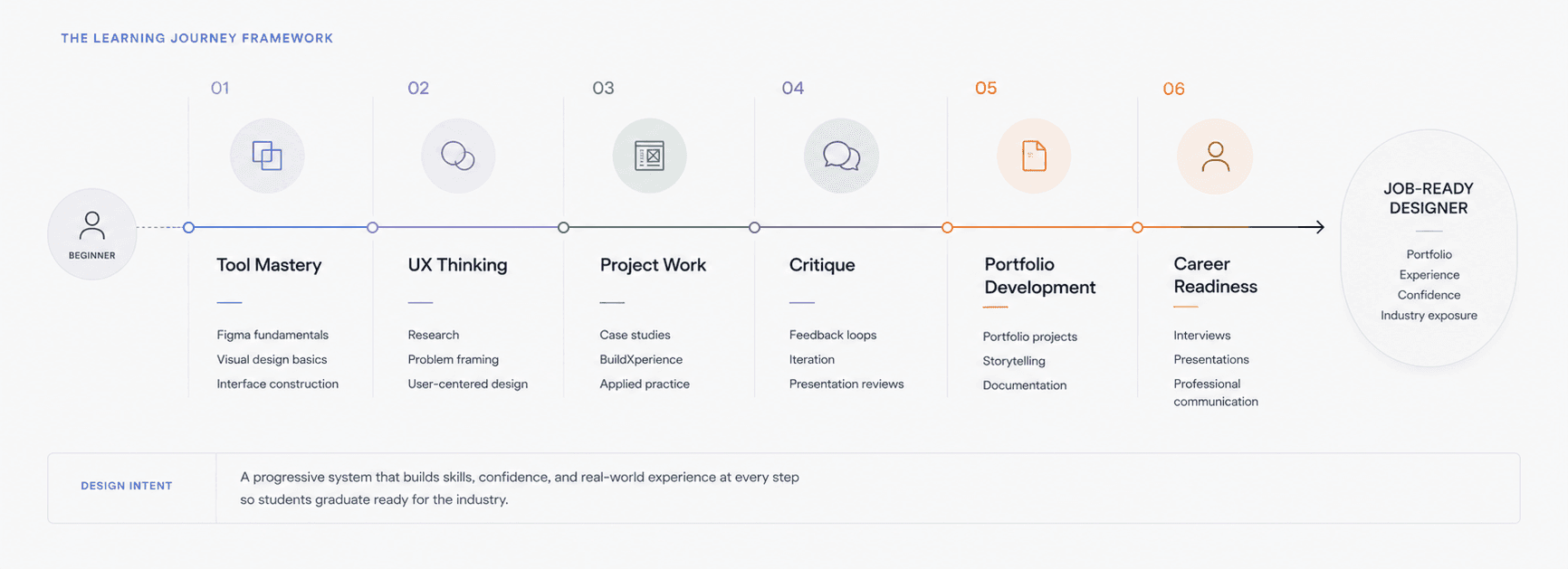
I approached the curriculum as a product and system design problem, treating students as users and job-readiness as the outcome.

Instead of organizing learning around isolated topics, I designed a progressive journey where each stage prepared students for the next: tool mastery, UX thinking, project work, critique, portfolio writing, and career readiness.

I approached the curriculum as a product and system design problem, treating students as users and job-readiness as the outcome.

Instead of organizing learning around isolated topics, I designed a progressive journey where each stage prepared students for the next: tool mastery, UX thinking, project work, critique, portfolio writing, and career readiness.

Insights

The curriculum evolved through observation, critique sessions, student output, and recurring gaps in understanding.

The curriculum evolved through observation, critique sessions, student output, and recurring gaps in understanding.

( Building the Program Architecture )

System Design
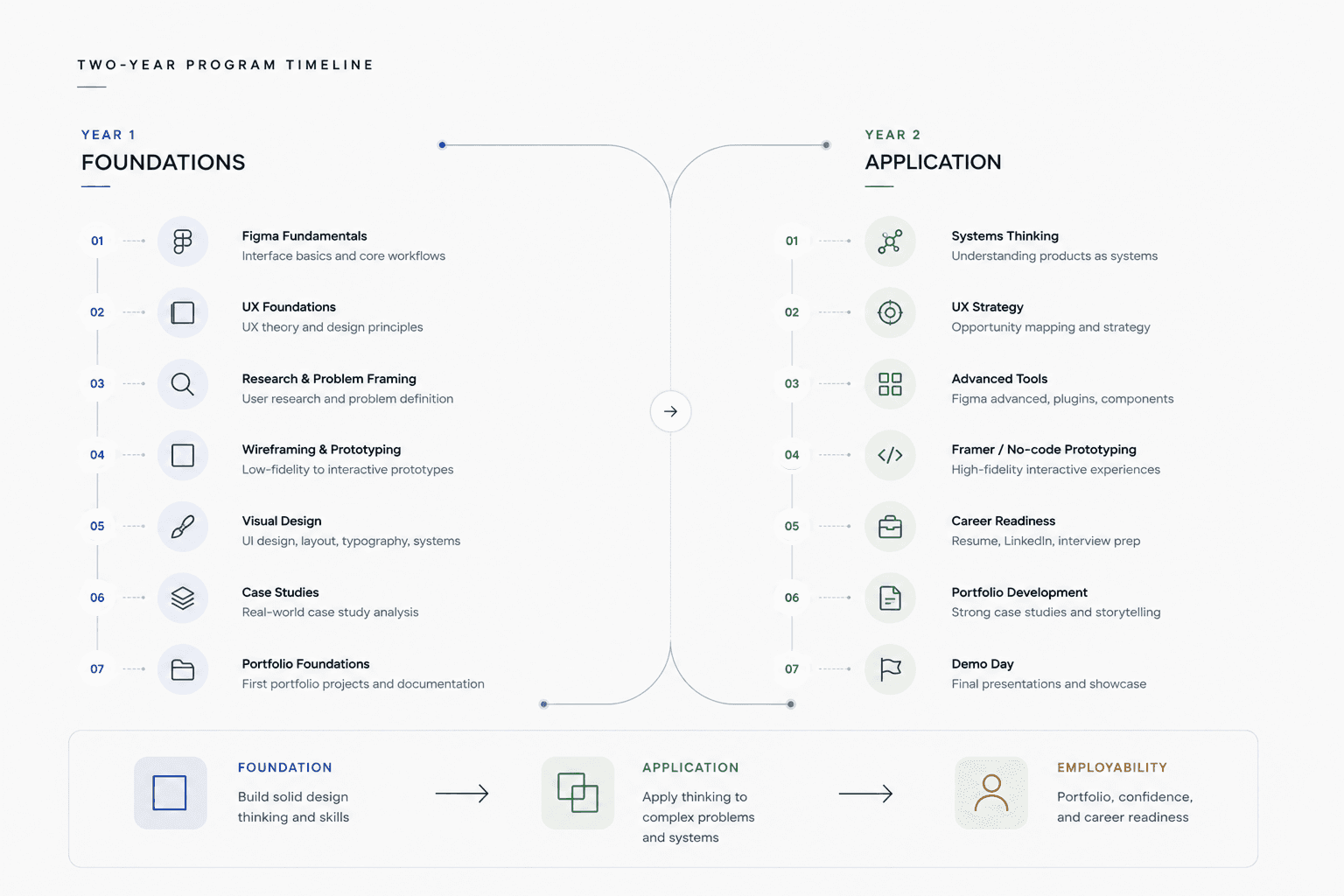
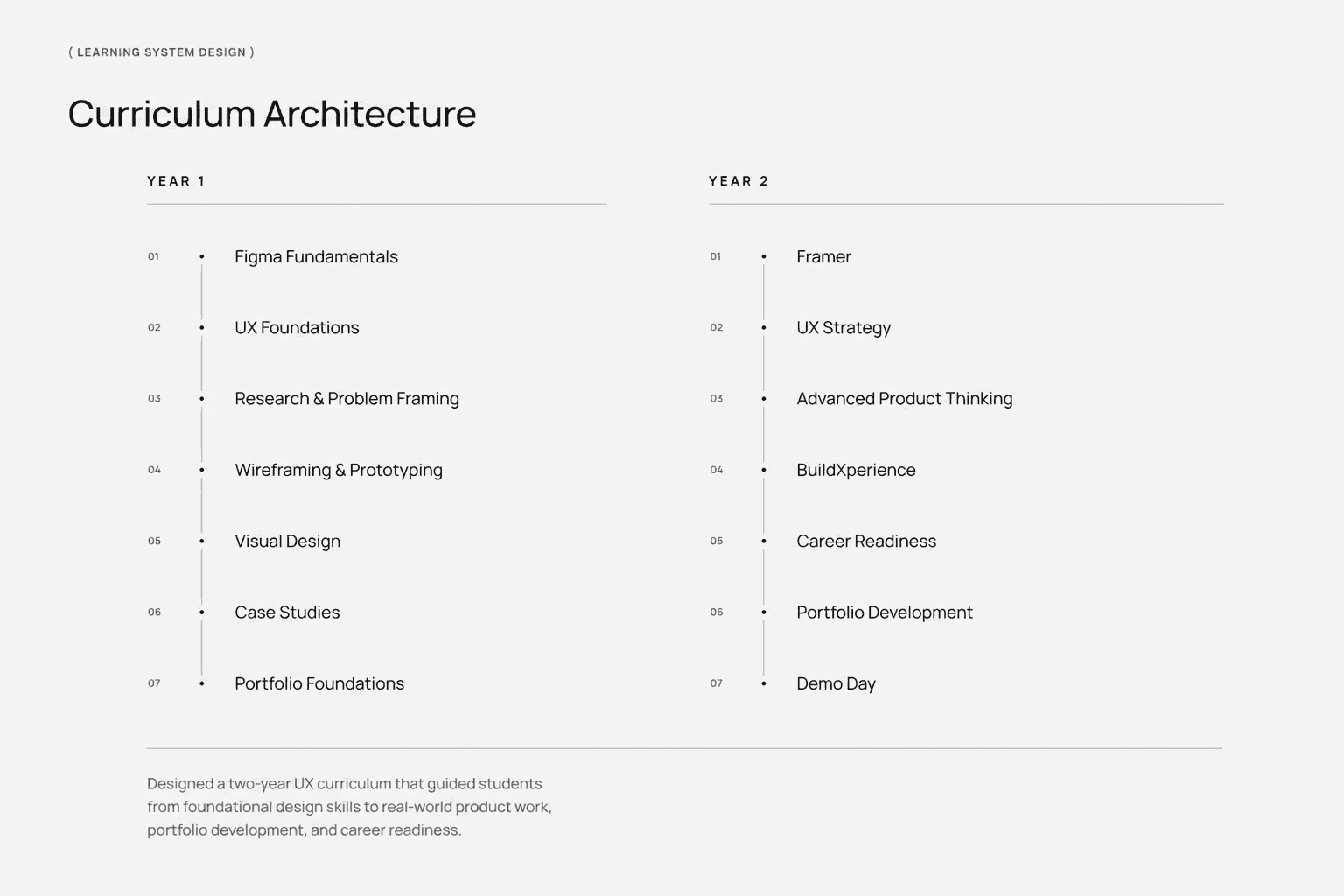
The final curriculum evolved into a structured two-year program that moved students from foundations into advanced practice and career preparation.

Year 1 focused on Figma fundamentals, UX theory, visual design, research, flows, usability testing, and portfolio projects.

Year 2 expanded into systems thinking, UX strategy, advanced tools, Framer/no-code prototyping, career readiness, interviews, presentations, and critique.

The final curriculum evolved into a structured two-year program that moved students from foundations into advanced practice and career preparation.

Year 1 focused on Figma fundamentals, UX theory, visual design, research, flows, usability testing, and portfolio projects.

Year 2 expanded into systems thinking, UX strategy, advanced tools, Framer/no-code prototyping, career readiness, interviews, presentations, and critique.

System Design

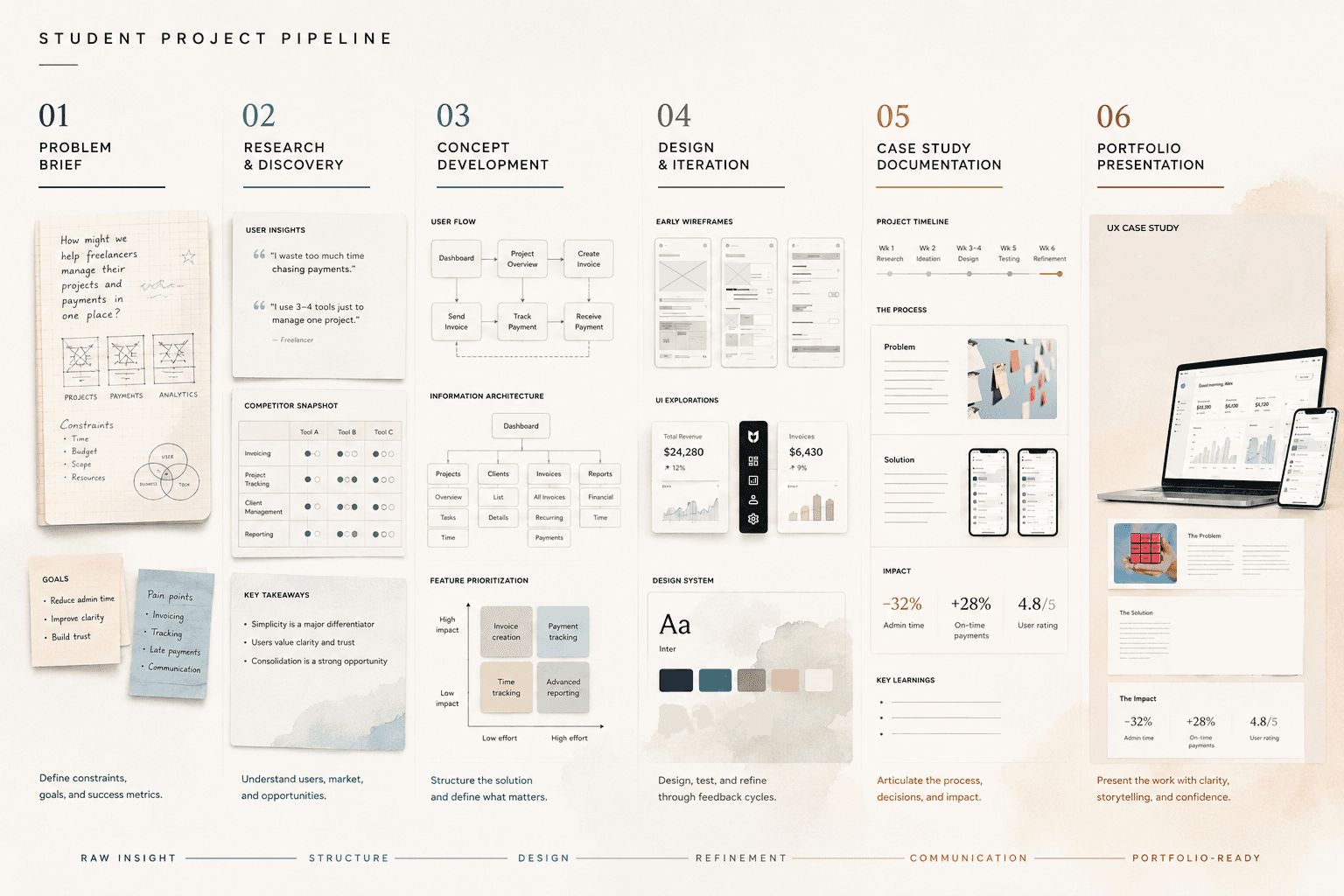
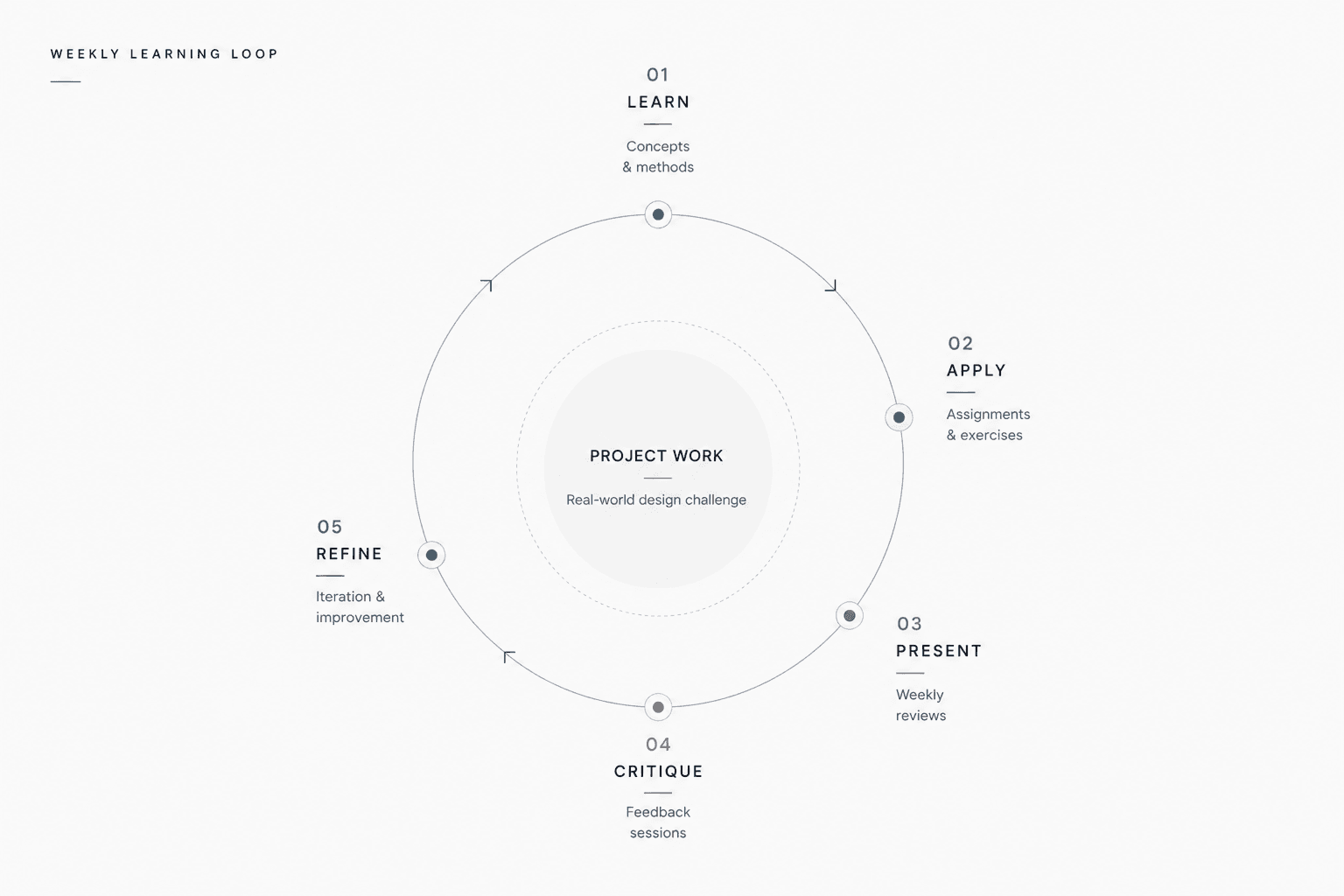
Learning was designed as an iterative cycle rather than a series of lectures.

Students continuously moved between learning concepts, applying them to projects, presenting work, receiving feedback, and refining their solutions.

This created a rhythm of practice that reinforced both technical skills and
design thinking.
Decisions
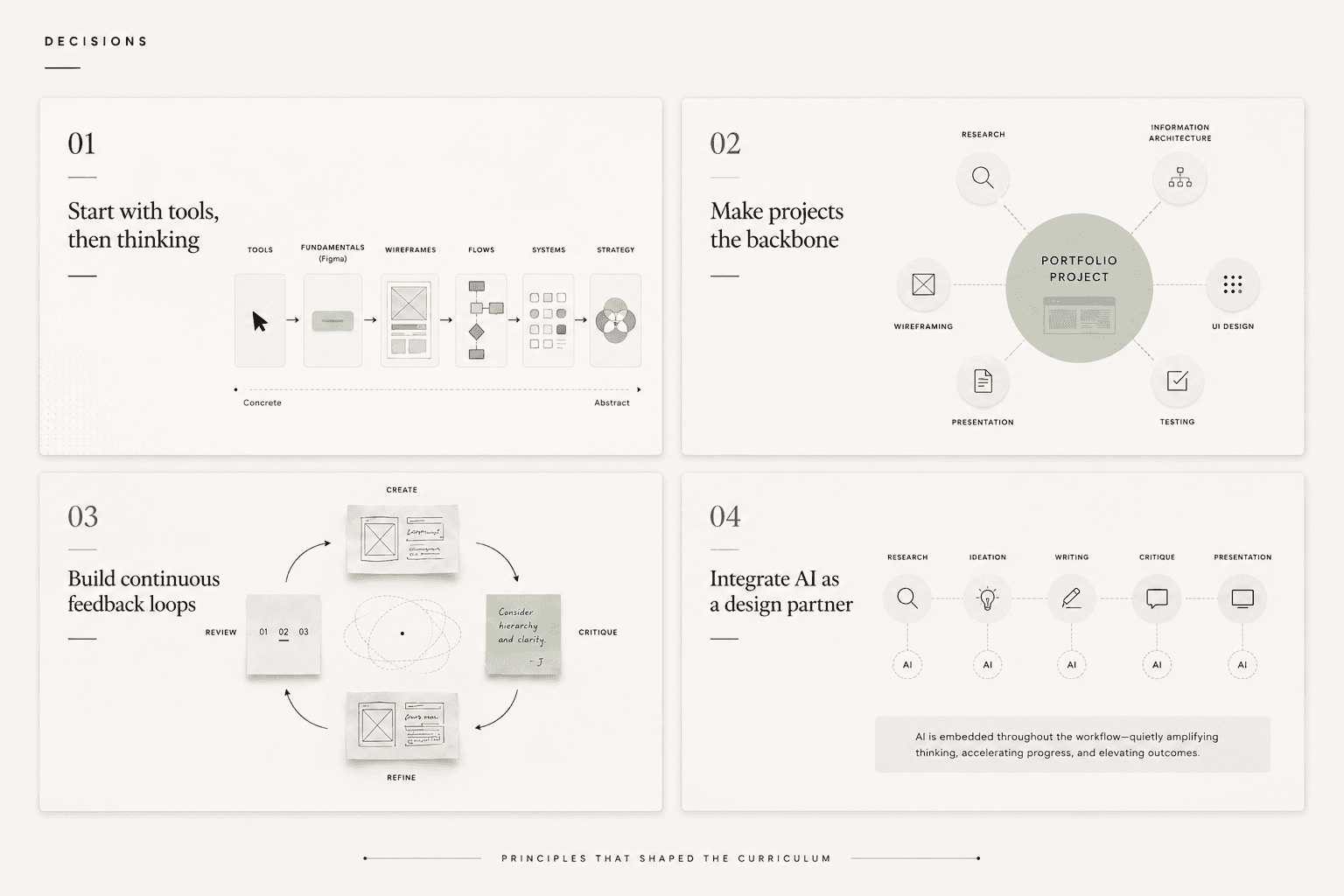
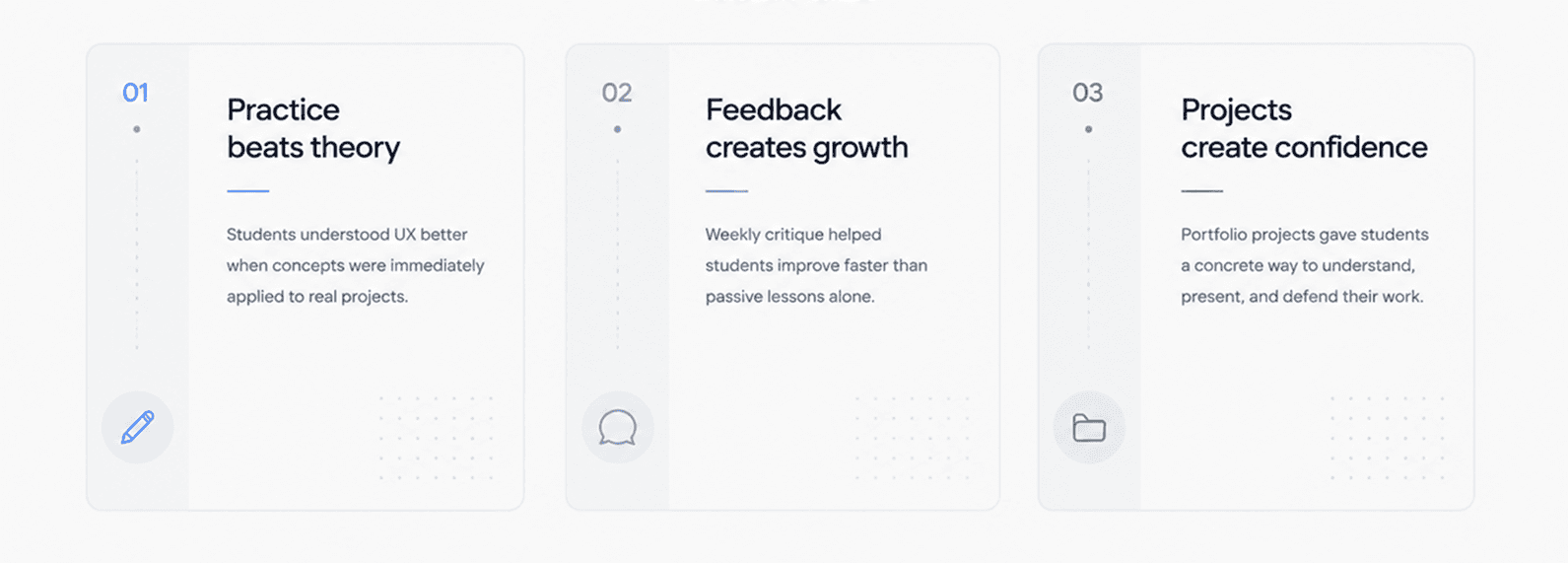
The curriculum was designed to help students build confidence gradually while connecting every lesson to practical output.

The curriculum was designed to help students build confidence gradually while connecting every lesson to practical output.

( Outcomes & Learning Impact )

Outcome
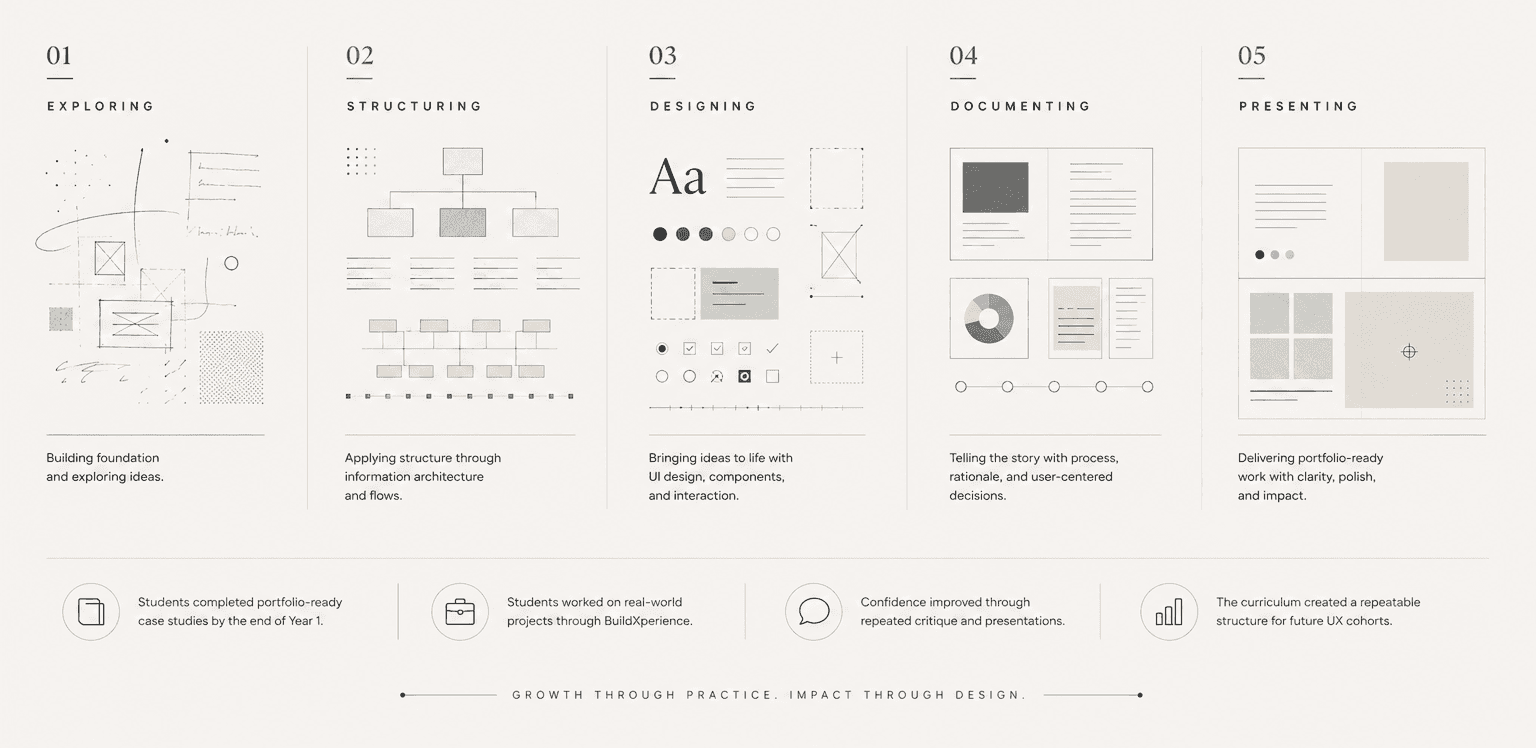
The curriculum transformed UX learning from passive instruction into an active, project-driven experience.

Students moved through a clearer pathway from beginner concepts to portfolio-ready work, with critique, iteration, and real-world project exposure embedded into the learning process.

The curriculum transformed UX learning from passive instruction into an active, project-driven experience.

Students moved through a clearer pathway from beginner concepts to portfolio-ready work, with critique, iteration, and real-world project exposure embedded into the learning process.

  • Students completed portfolio-ready case studies by the end of Year 1

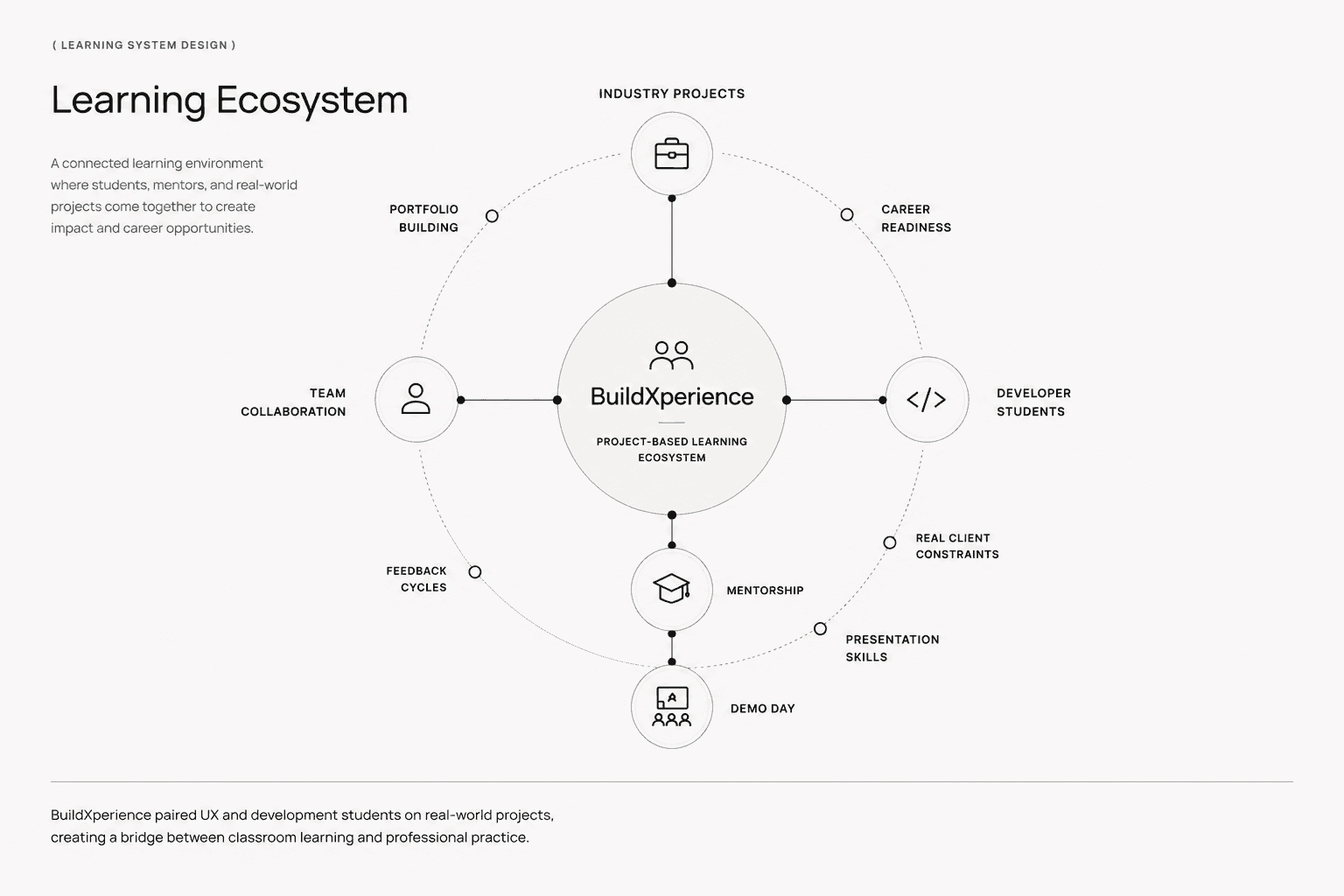
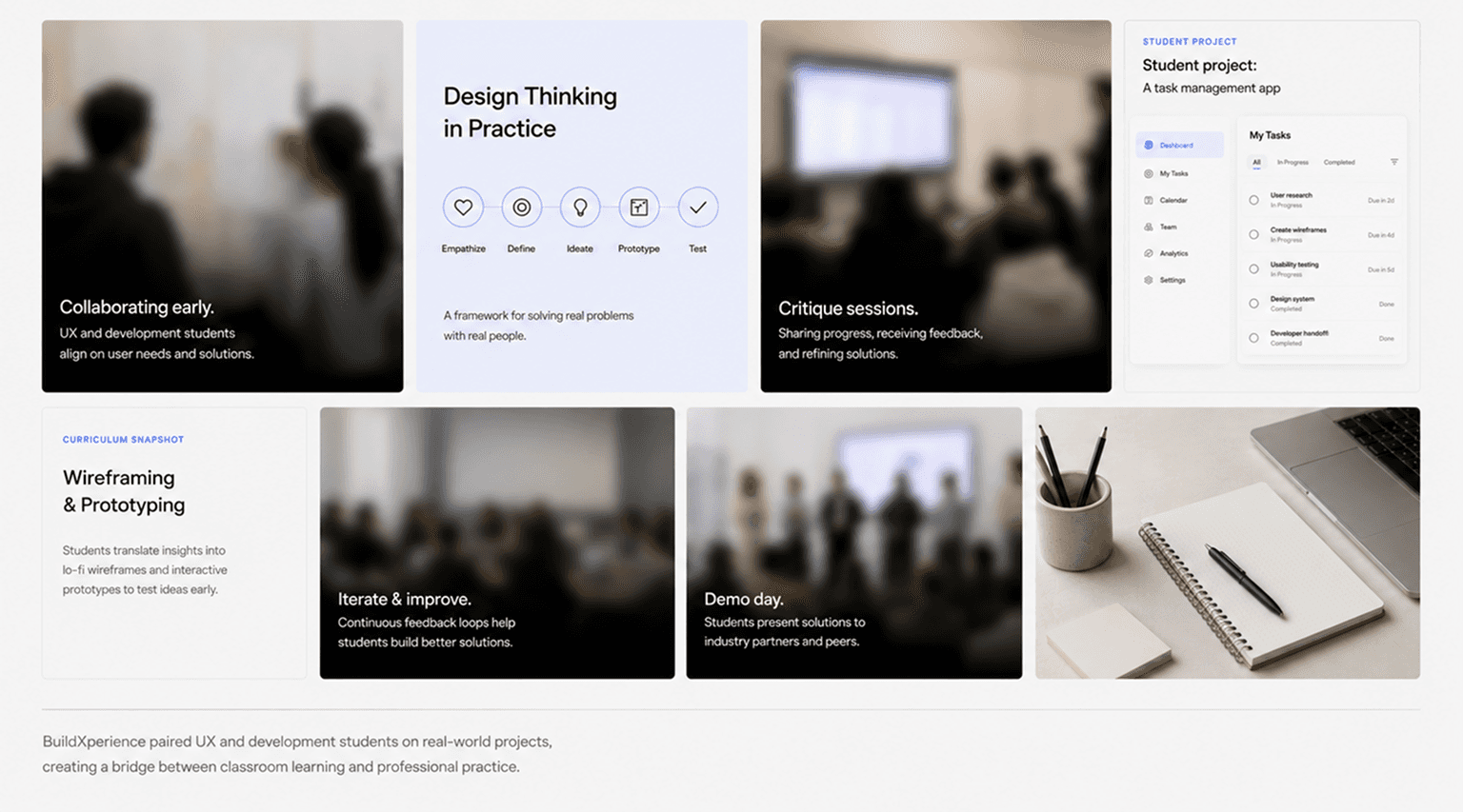
  • Students worked on real-world projects through BuildXperience

  • Confidence improved through repeated critique and presentation practice

  • The curriculum created a repeatable structure for future UX cohorts

  • Students completed portfolio-ready case studies by the end of Year 1

  • Students worked on real-world projects through BuildXperience

  • Confidence improved through repeated critique and presentation practice

  • The curriculum created a repeatable structure for future UX cohorts

( Outcomes & Reflections )

Success Criteria
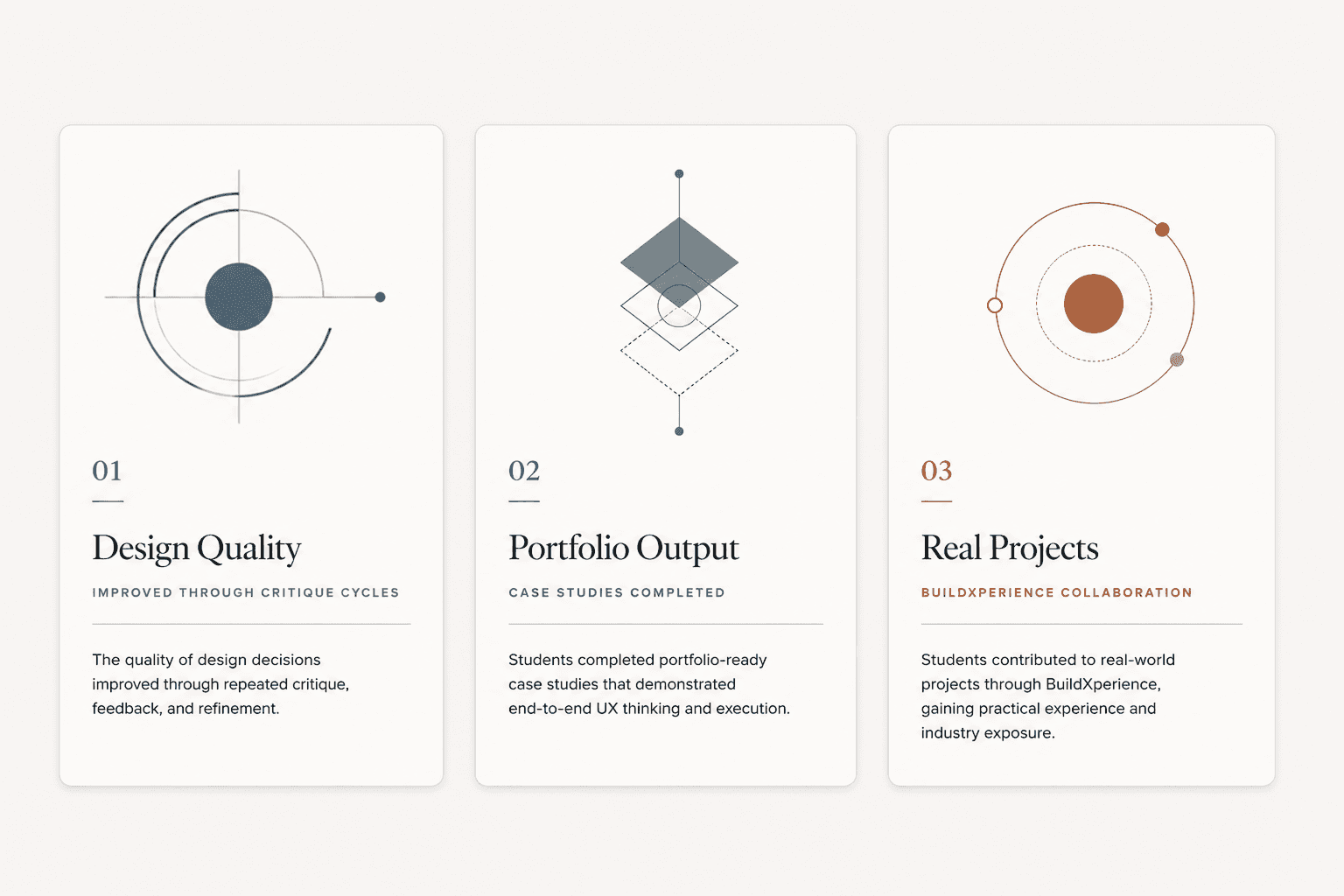
Because this was an educational system, success was measured through student progression, quality of output, confidence, and portfolio readiness rather than traditional product metrics.

Because this was an educational system, success was measured through student progression, quality of output, confidence, and portfolio readiness rather than traditional product metrics.

Reflection

This project reinforced that designing learning is fundamentally designing behavior.

The biggest shift was moving from “teaching UX” to building a system that helps students think, practice, critique, and iterate like designers.

It also showed that structure and feedback are critical. Without them, learning stays theoretical. With them, it becomes practical, repeatable, and outcome-driven.